grammar chart · Lithuanian
Lithuanian prepositions and the cases they take
Each Lithuanian preposition takes a particular case, so learn the two together: iš + genitive, į + accusative, su + instrumental. Po and už take more than one case, and the case changes the meaning. The locative needs no preposition at all.
The prepositions to learn first
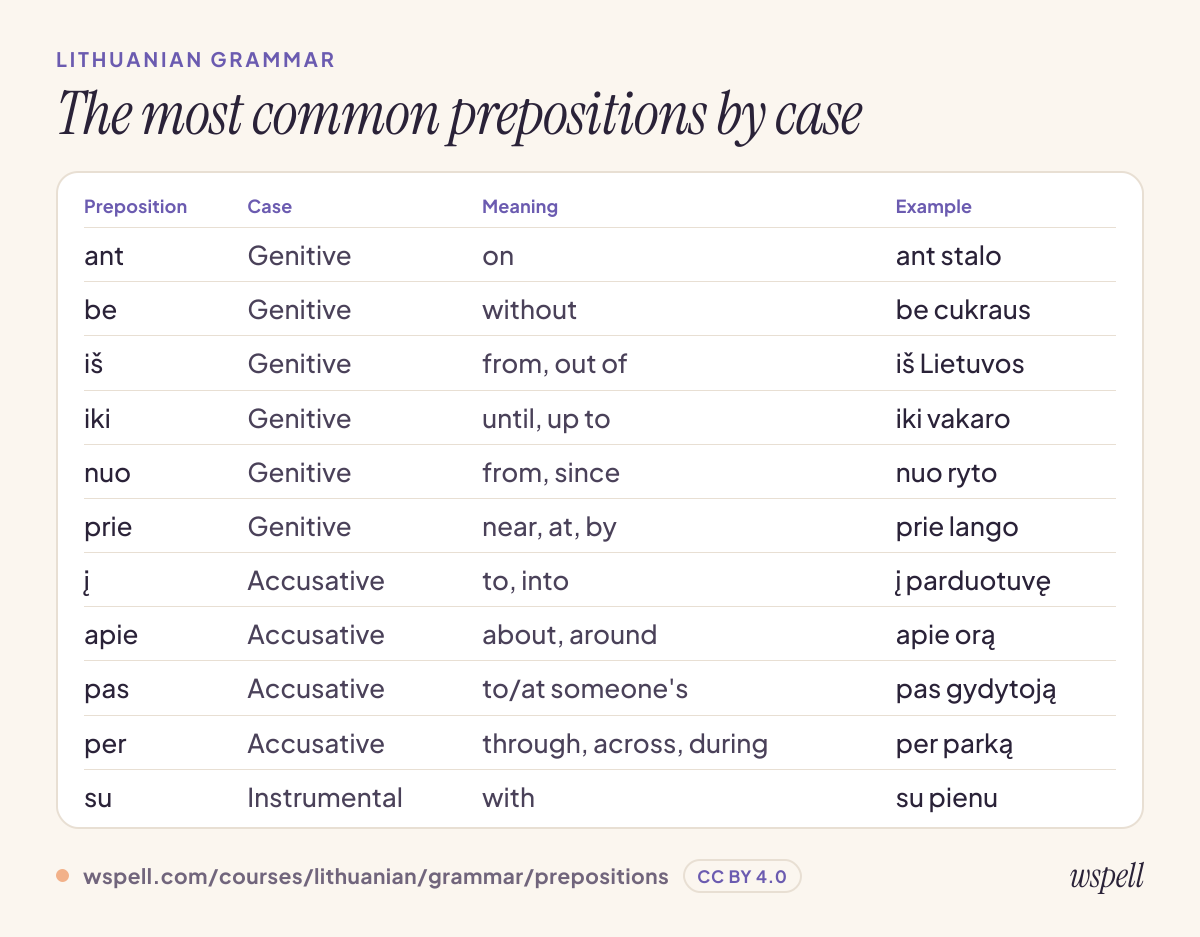
| Preposition | Case | Meaning | Example |
|---|---|---|---|
| ant | Genitive | on | ant stalo |
| be | Genitive | without | be cukraus |
| iš | Genitive | from, out of | iš Lietuvos |
| iki | Genitive | until, up to | iki vakaro |
| nuo | Genitive | from, since | nuo ryto |
| prie | Genitive | near, at, by | prie lango |
| į | Accusative | to, into | į parduotuvę |
| apie | Accusative | about, around | apie orą |
| pas | Accusative | to/at someone's | pas gydytoją |
| per | Accusative | through, across, during | per parką |
| su | Instrumental | with | su pienu |
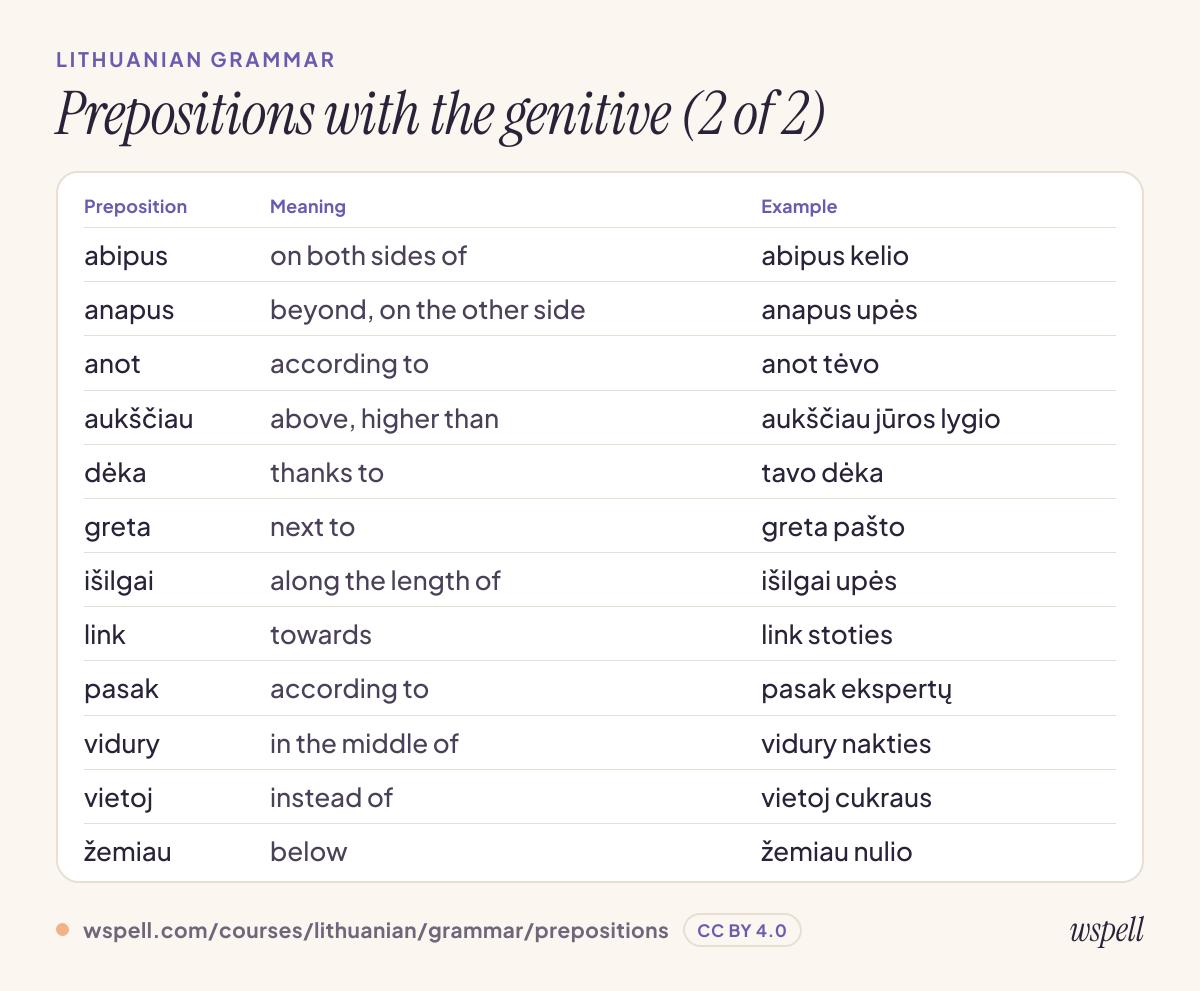
Genitive prepositions at every level
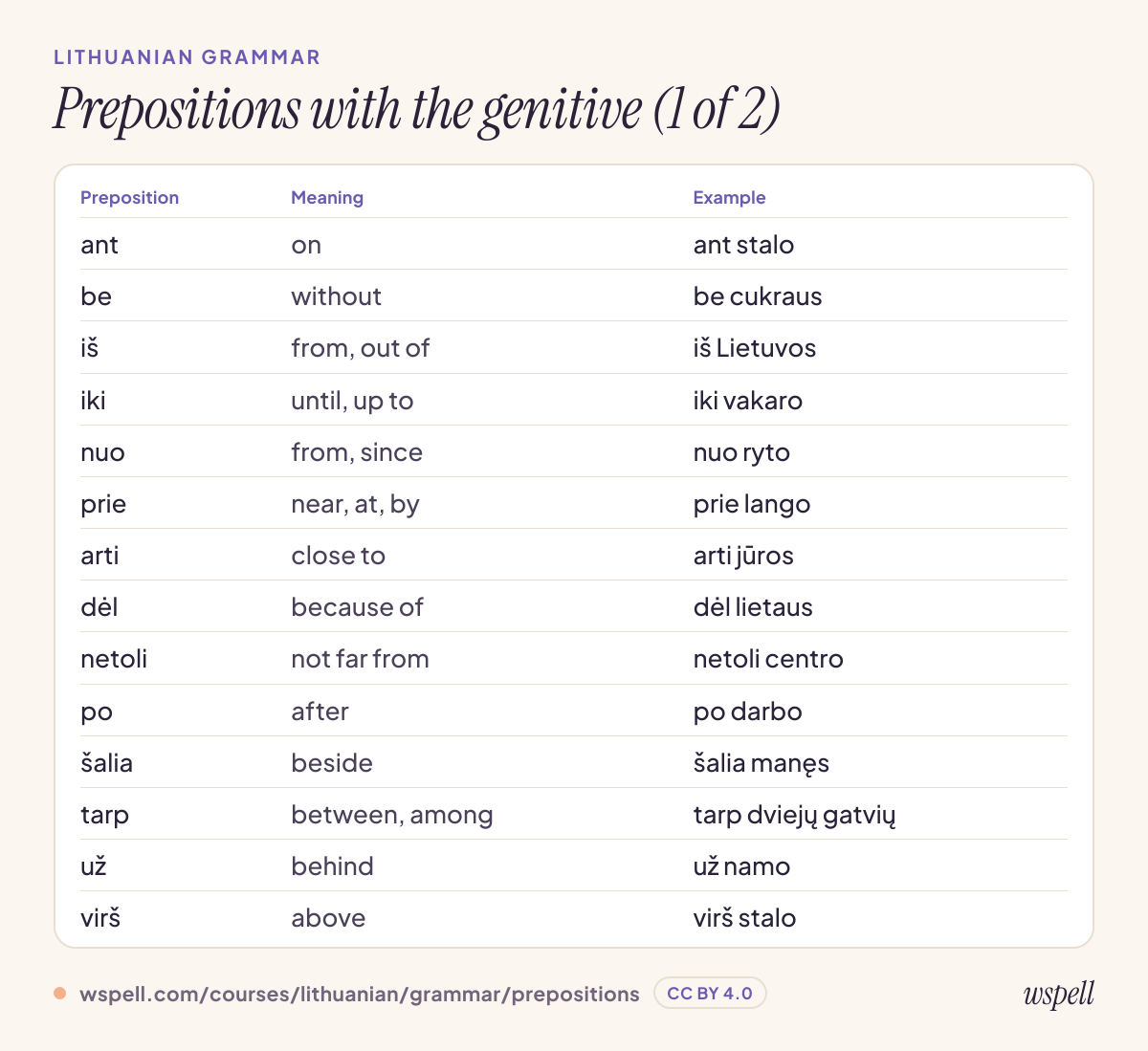
| Preposition | Meaning | Example |
|---|---|---|
| ant | on | ant stalo |
| be | without | be cukraus |
| iš | from, out of | iš Lietuvos |
| iki | until, up to | iki vakaro |
| nuo | from, since | nuo ryto |
| prie | near, at, by | prie lango |
| arti | close to | arti jūros |
| dėl | because of | dėl lietaus |
| netoli | not far from | netoli centro |
| po | after | po darbo |
| šalia | beside | šalia manęs |
| tarp | between, among | tarp dviejų gatvių |
| už | behind | už namo |
| virš | above | virš stalo |
| abipus | on both sides of | abipus kelio |
| anapus | beyond, on the other side | anapus upės |
| anot | according to | anot tėvo |
| aukščiau | above, higher than | aukščiau jūros lygio |
| dėka | thanks to | tavo dėka |
| greta | next to | greta pašto |
| išilgai | along the length of | išilgai upės |
| link | towards | link stoties |
| pasak | according to | pasak ekspertų |
| vidury | in the middle of | vidury nakties |
| vietoj | instead of | vietoj cukraus |
| žemiau | below | žemiau nulio |
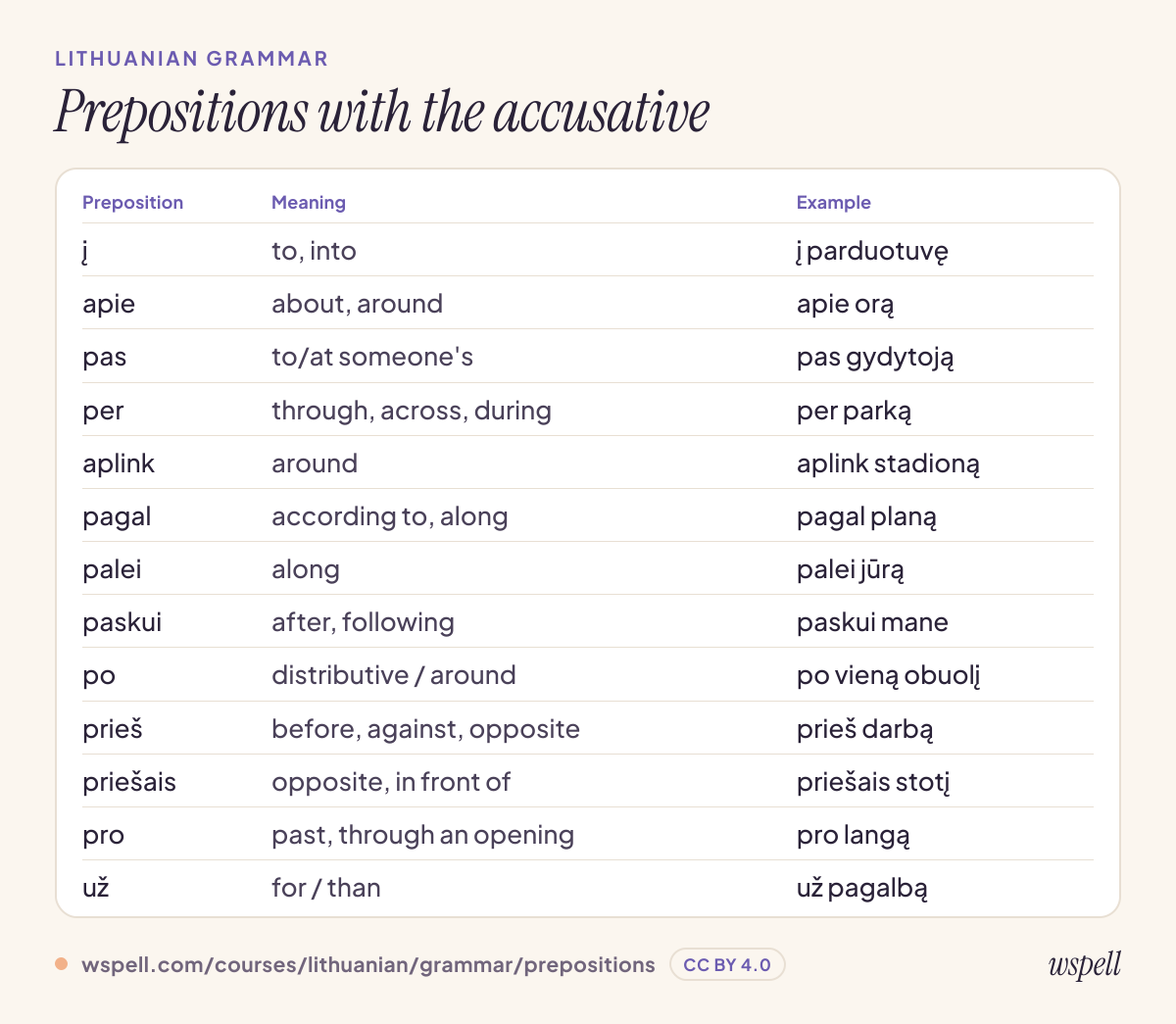
Accusative prepositions at every level
| Preposition | Meaning | Example |
|---|---|---|
| į | to, into | į parduotuvę |
| apie | about, around | apie orą |
| pas | to/at someone's | pas gydytoją |
| per | through, across, during | per parką |
| aplink | around | aplink stadioną |
| pagal | according to, along | pagal planą |
| palei | along | palei jūrą |
| paskui | after, following | paskui mane |
| po | distributive / around | po vieną obuolį |
| prieš | before, against, opposite | prieš darbą |
| priešais | opposite, in front of | priešais stotį |
| pro | past, through an opening | pro langą |
| už | for / than | už pagalbą |
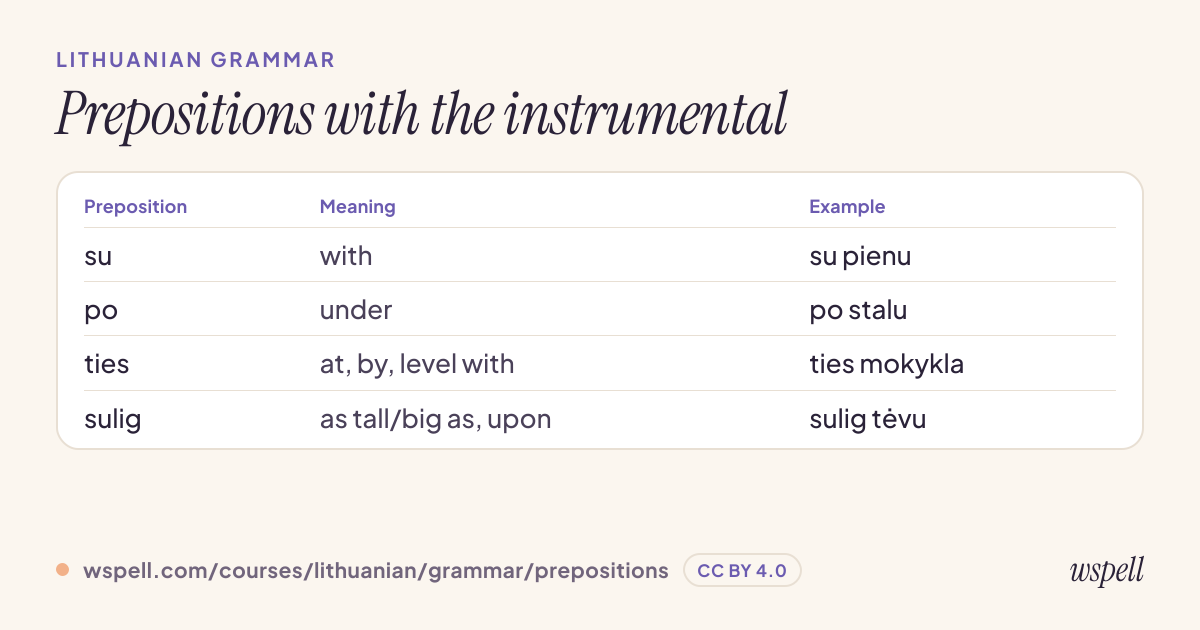
Instrumental prepositions at every level
| Preposition | Meaning | Example |
|---|---|---|
| su | with | su pienu |
| po | under | po stalu |
| ties | at, by, level with | ties mokykla |
| sulig | as tall/big as, upon | sulig tėvu |
Po and už: one preposition, more than one case
Po: under, after, or each
po with the INSTRUMENTAL means under (po stalu); po with the GENITIVE means after (po darbo); po with the ACCUSATIVE is distributive — so much each (po vieną obuolį, po eurą) or movement around an area (vaikšto po miestą). The case decides the meaning.
- Katė miega po stalu. — The cat sleeps under the table.
- Po darbo einu namo. — After work I go home.
- Gavome po vieną obuolį. — We got one apple each.
- Vaikštau po miestą. — I walk around the city.
Už: behind, or for and than
už with the genitive means behind/beyond (už namo, už upės); už with the accusative means for/in exchange (ačiū už pagalbą, moku už knygą) and marks the standard of comparison (didesnis už mane — bigger than me).
- Mašina stovi už namo. — The car is behind the house.
- Ačiū už pagalbą. — Thanks for the help.
- Jis didesnis už mane. — He is bigger than me.
practise this chart
Drill these forms in real sentences — every answer checked, every word spoken.
practise now — free to try; some drills ask for a free account
save or print this chart
Under the main tables on this page sits a picture of each — keep one on your phone, share it or print it.
Free to share and adapt under CC BY 4.0 — credit wspell and link to this page. the licence
credit line to copy: Lithuanian prepositions and the cases they take — wspell, CC BY 4.0, https://wspell.com/courses/lithuanian/grammar/prepositions
questions
Which case follows a preposition in Lithuanian?
It depends on the preposition. Most take the genitive (ant, be, iš, iki, nuo, prie), others the accusative (į, per, apie, pas), and su takes the instrumental.
Is there a word for 'in' in Lithuanian?
Not for being inside something: the locative case does that alone (gyvenu Vilniuje). For movement into a place, use į + accusative: einu į parduotuvę.
What does po mean in Lithuanian?
It depends on the case: po + instrumental means under (po stalu), po + genitive means after (po darbo), and po + accusative means each or around (po vieną obuolį, po miestą).