grammar chart · English
The verb to be: am, is, are, was, were
To be is the most irregular verb in English and the one you use most. In the present it has three forms — am, is, are — and in the past two: was and were. It needs no do in statements and questions (only the imperative takes it: Don't be late!): you make it negative with not (she is not, she isn't) and turn it into a question by putting it first (Is she?).
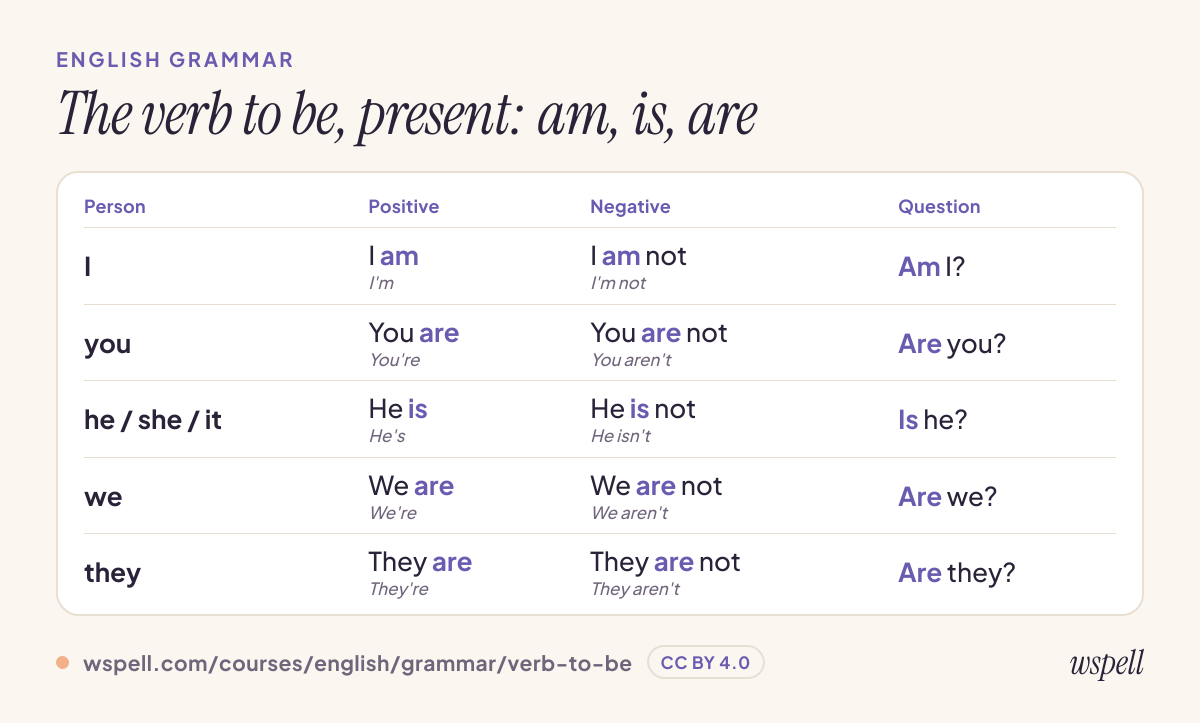
Present: am, is, are
The short form is under each full one: I'm, isn't, aren't. Am has no negative short form like isn't or aren't: say I'm not (in a question: aren't I?).
| Person | Positive | Negative | Question |
|---|---|---|---|
| I | I am I'm | I am not I'm not | Am I? |
| you | You are You're | You are not You aren't | Are you? |
| he / she / it | He is He's | He is not He isn't | Is he? |
| we | We are We're | We are not We aren't | Are we? |
| they | They are They're | They are not They aren't | Are they? |
Past: was, were
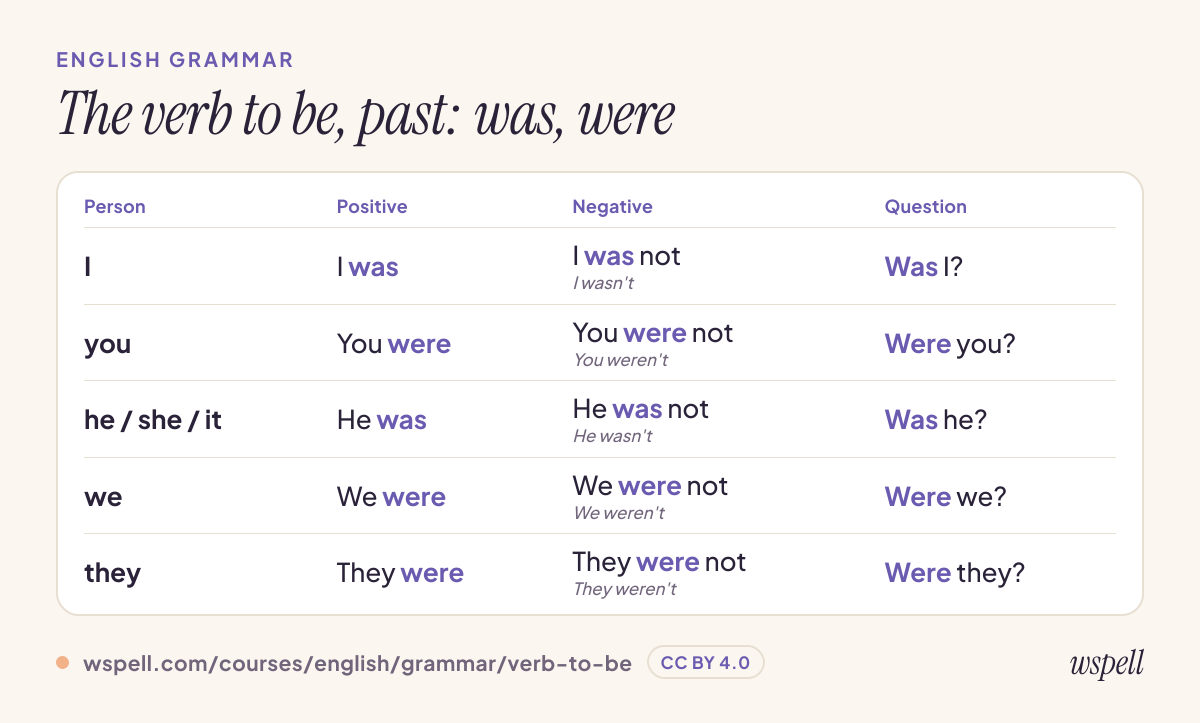
| Person | Positive | Negative | Question |
|---|---|---|---|
| I | I was | I was not I wasn't | Was I? |
| you | You were | You were not You weren't | Were you? |
| he / she / it | He was | He was not He wasn't | Was he? |
| we | We were | We were not We weren't | Were we? |
| they | They were | They were not They weren't | Were they? |
Questions and negatives without do
Am, is, are, was, were: the most irregular verb
'Be' is the most irregular verb: present am/is/are, past was/were, participles being/been. It is its own auxiliary (no do-support): a question puts it before the subject (are you?) and a negative adds not after it (he isn't).
- Are you ready?
- They weren't at home.
Age with be
I am twenty: age takes be, not have
English states age with the verb 'be', not 'have': 'I am twenty (years old)'. 'Years old' is optional after the number, but 'years' cannot stand without 'old' (not 'I am twenty years').
- My daughter is seven years old.
There is and there are
There is, there are
Dummy 'there' + be introduces the existence of something; be agrees with the following noun (there is a book / there are books), and the tense shifts on 'be' (there was, there will be, there have been).
- There is a problem.
- There are two options.
learn it step by step
save or print this chart
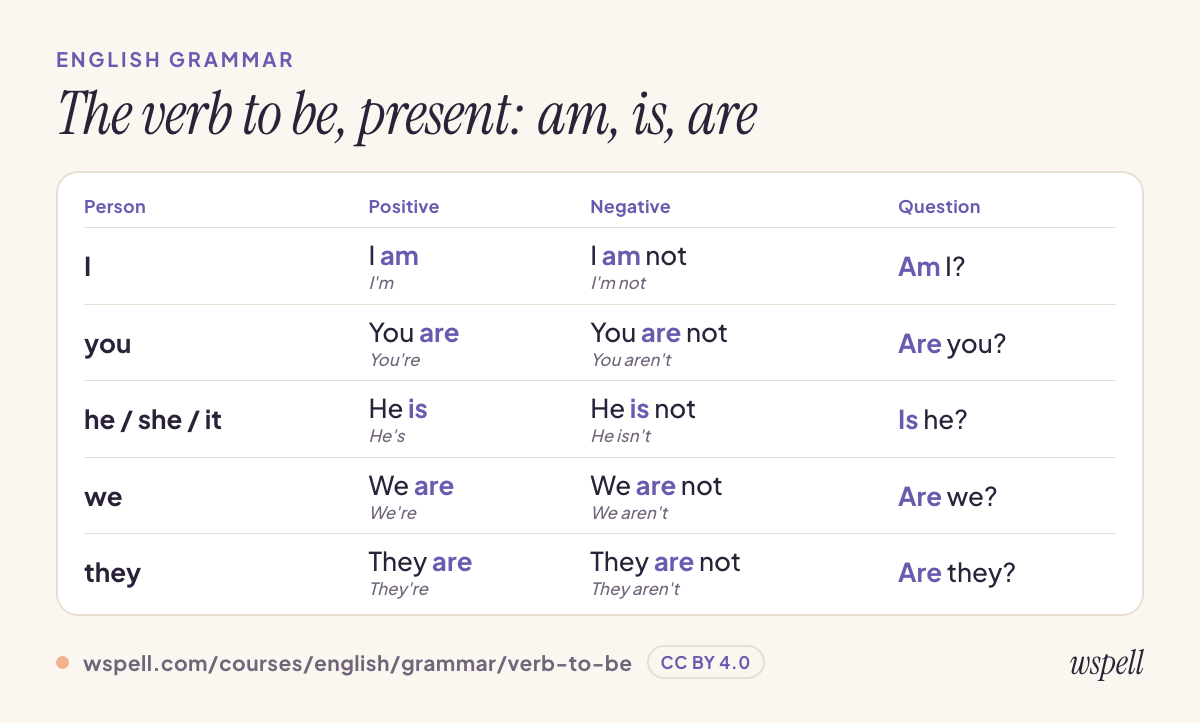
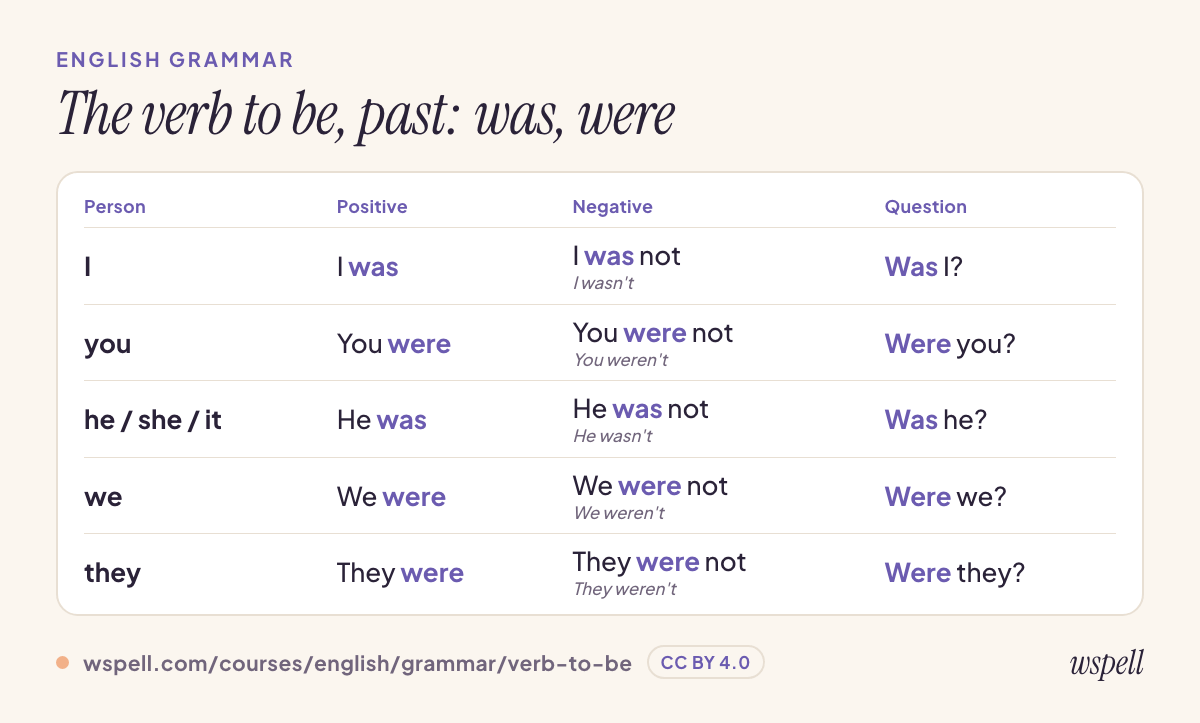
Under the main tables on this page sits a picture of each — keep one on your phone, share it or print it.
Free to share and adapt under CC BY 4.0 — credit wspell and link to this page. the licence
credit line to copy: The verb to be: am, is, are, was, were — wspell, CC BY 4.0, https://wspell.com/courses/english/grammar/verb-to-be
questions
When do I use am, is and are?
Am goes only with I, is with he, she, it and any one person or thing, and are with you, we, they and plurals: I am, she is, they are.
Was or were?
Was with I, he, she and it; were with you, we and they: I was, you were, it was, they were. After if in an imagined situation, were is used for every person, especially in formal English: If I were you.
How do you make a question with to be?
Put am, is, are, was or were before the subject — no do: Are you ready? Was it expensive? The negative adds not after it: I'm not ready, it wasn't expensive.