grammar chart · English
English irregular verbs: 100 common verbs with all three forms
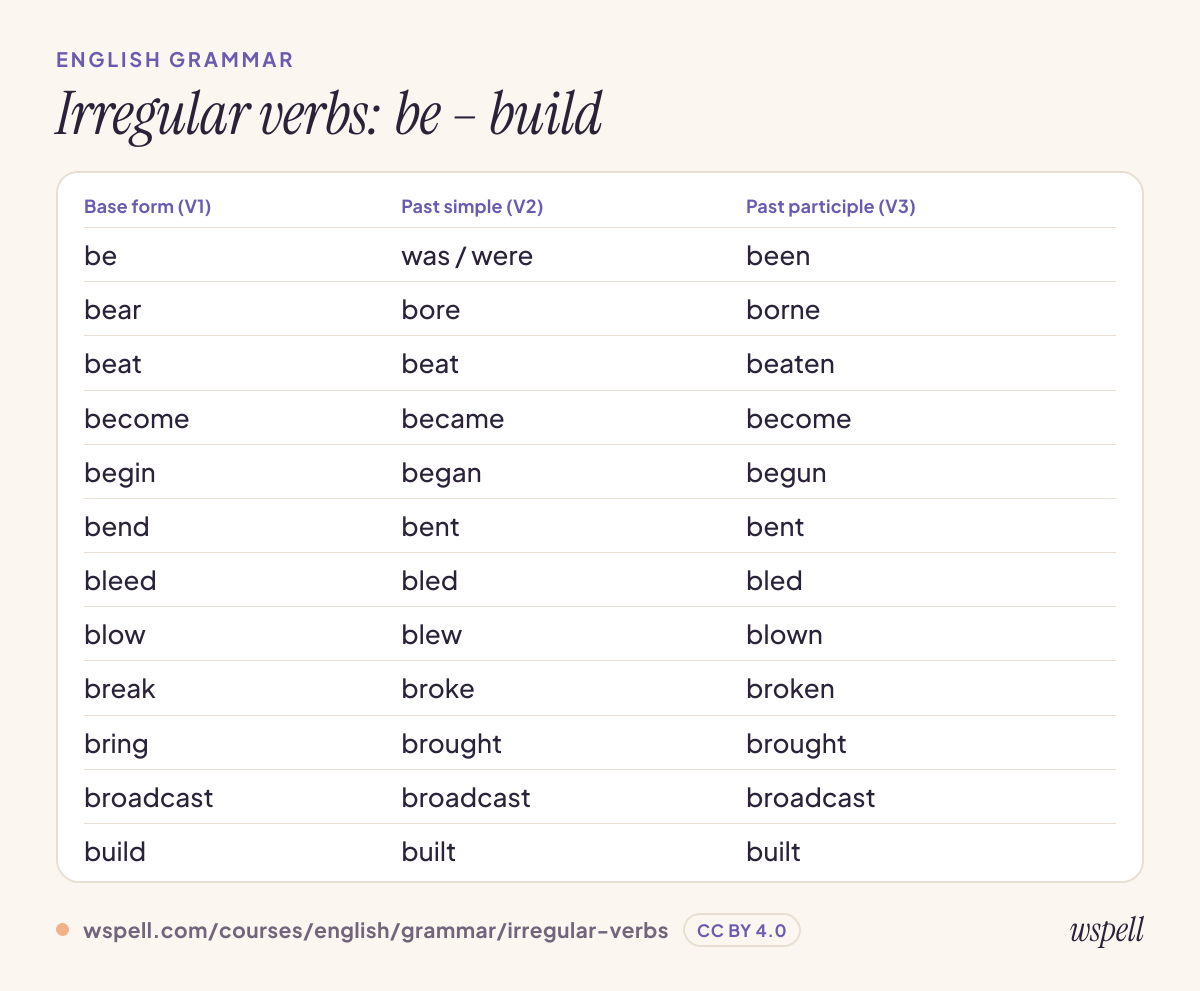
An irregular verb does not make its past simple and past participle with -ed — go, went, gone — or has an irregular form beside the -ed one: learned or learnt. Here are a hundred of the ones you meet most, each with its three forms — the base form (V1), the past simple (V2) and the past participle (V3). The first tables run from A to Z; below them the same verbs are grouped by pattern, which makes them easier to learn.
100 common irregular verbs, A to Z
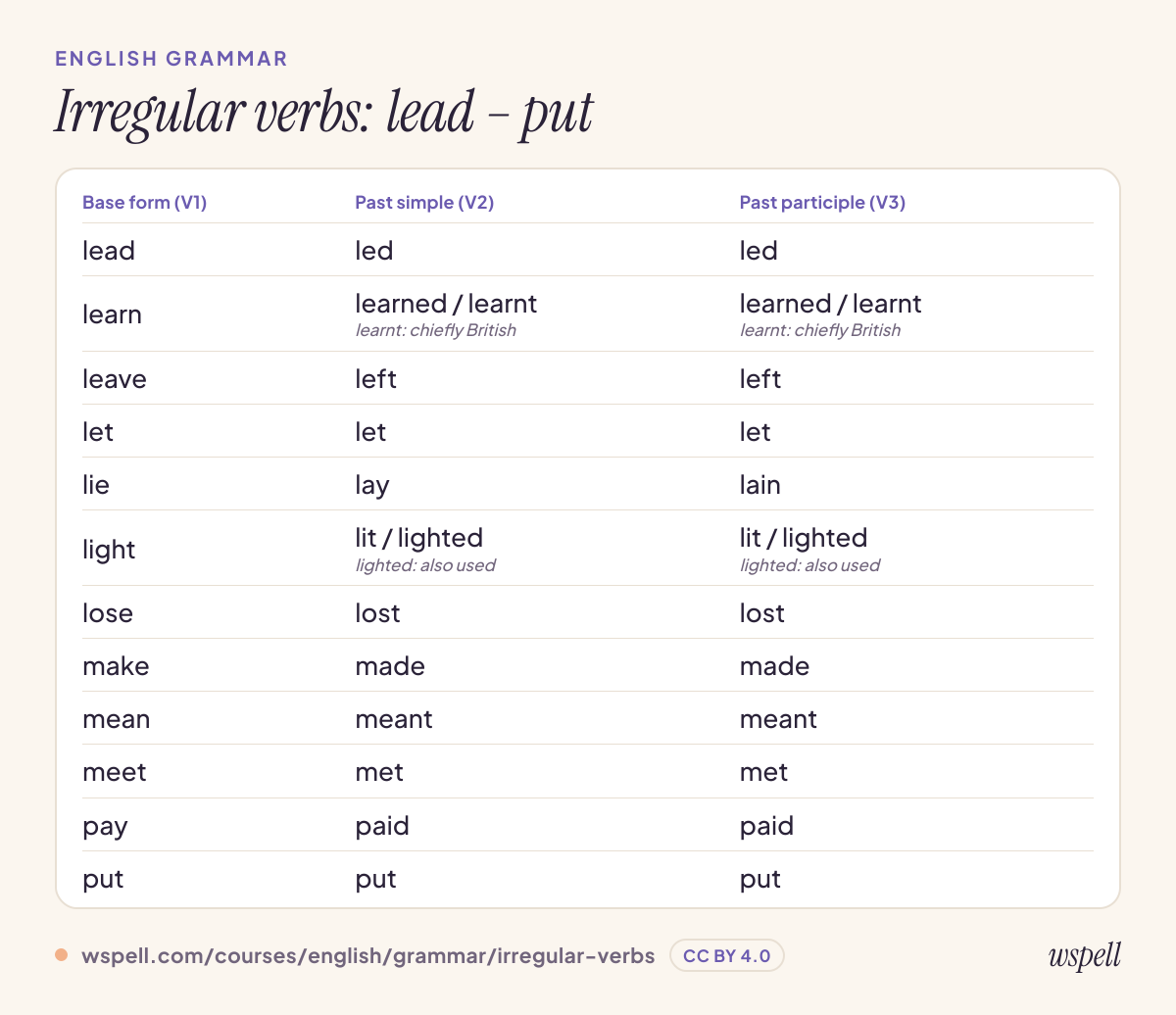
Where two forms are standard, both are given: learned / learnt (learnt is chiefly British), got / gotten (gotten is American).
| Base form (V1) | Past simple (V2) | Past participle (V3) |
|---|---|---|
| be | was / were | been |
| bear | bore | borne |
| beat | beat | beaten |
| become | became | become |
| begin | began | begun |
| bend | bent | bent |
| bleed | bled | bled |
| blow | blew | blown |
| break | broke | broken |
| bring | brought | brought |
| broadcast | broadcast | broadcast |
| build | built | built |
| burn | burned / burnt burnt: chiefly British | burned / burnt burnt: chiefly British |
| buy | bought | bought |
| catch | caught | caught |
| choose | chose | chosen |
| come | came | come |
| cost | cost | cost |
| cut | cut | cut |
| deal | dealt | dealt |
| do | did | done |
| draw | drew | drawn |
| dream | dreamed / dreamt dreamt: chiefly British | dreamed / dreamt dreamt: chiefly British |
| drink | drank | drunk |
| drive | drove | driven |
| Base form (V1) | Past simple (V2) | Past participle (V3) |
|---|---|---|
| eat | ate | eaten |
| fall | fell | fallen |
| feed | fed | fed |
| feel | felt | felt |
| fight | fought | fought |
| find | found | found |
| flee | fled | fled |
| fly | flew | flown |
| forget | forgot | forgotten |
| forgive | forgave | forgiven |
| freeze | froze | frozen |
| get | got | got / gotten gotten: American |
| give | gave | given |
| go | went | gone |
| grow | grew | grown |
| hang | hung / hanged hanged: of a person killed by hanging | hung / hanged hanged: of a person killed by hanging |
| have | had | had |
| hear | heard | heard |
| hide | hid | hidden |
| hit | hit | hit |
| hold | held | held |
| hurt | hurt | hurt |
| keep | kept | kept |
| know | knew | known |
| lay | laid | laid |
| Base form (V1) | Past simple (V2) | Past participle (V3) |
|---|---|---|
| lead | led | led |
| learn | learned / learnt learnt: chiefly British | learned / learnt learnt: chiefly British |
| leave | left | left |
| let | let | let |
| lie | lay | lain |
| light | lit / lighted lighted: also used | lit / lighted lighted: also used |
| lose | lost | lost |
| make | made | made |
| mean | meant | meant |
| meet | met | met |
| pay | paid | paid |
| put | put | put |
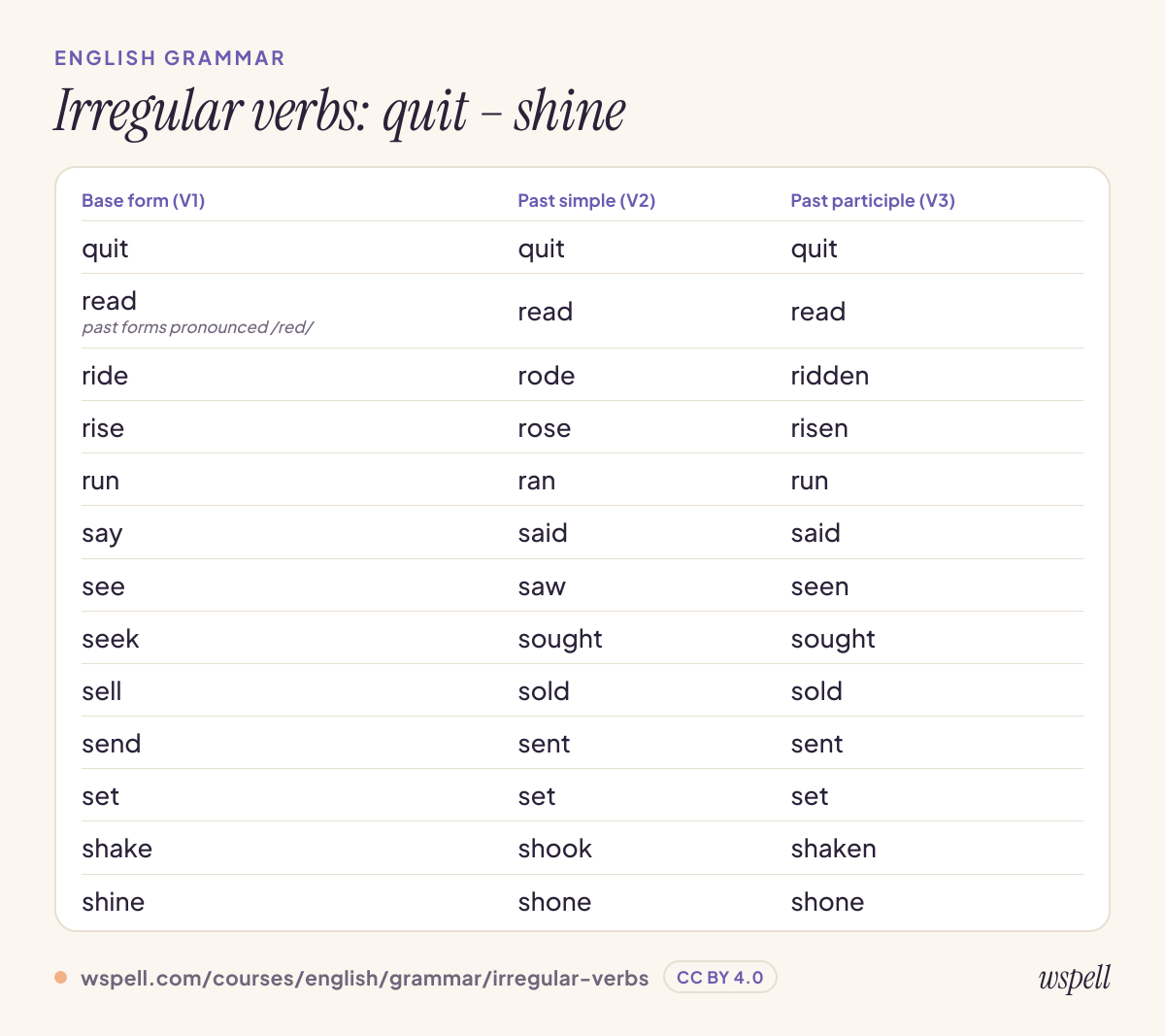
| quit | quit | quit |
| read past forms pronounced /red/ | read | read |
| ride | rode | ridden |
| rise | rose | risen |
| run | ran | run |
| say | said | said |
| see | saw | seen |
| seek | sought | sought |
| sell | sold | sold |
| send | sent | sent |
| set | set | set |
| shake | shook | shaken |
| shine | shone | shone |
| Base form (V1) | Past simple (V2) | Past participle (V3) |
|---|---|---|
| shoot | shot | shot |
| show | showed | shown |
| shut | shut | shut |
| sing | sang | sung |
| sit | sat | sat |
| sleep | slept | slept |
| speak | spoke | spoken |
| spend | spent | spent |
| stand | stood | stood |
| steal | stole | stolen |
| stick | stuck | stuck |
| strike | struck | struck |
| swear | swore | sworn |
| swim | swam | swum |
| take | took | taken |
| teach | taught | taught |
| tear | tore | torn |
| tell | told | told |
| think | thought | thought |
| throw | threw | thrown |
| understand | understood | understood |
| wake | woke | woken |
| wear | wore | worn |
| win | won | won |
| write | wrote | written |
Irregular verbs by pattern
Every irregular verb fits one of five patterns, set by which of its three forms are the same. Learning them in groups is quicker than learning a hundred separate lines.
| Base form (V1) | Past simple (V2) | Past participle (V3) |
|---|---|---|
| broadcast | broadcast | broadcast |
| cost | cost | cost |
| cut | cut | cut |
| hit | hit | hit |
| hurt | hurt | hurt |
| let | let | let |
| put | put | put |
| quit | quit | quit |
| read past forms pronounced /red/ | read | read |
| set | set | set |
| shut | shut | shut |
| Base form (V1) | Past simple (V2) | Past participle (V3) |
|---|---|---|
| become | became | become |
| come | came | come |
| run | ran | run |
| Base form (V1) | Past simple (V2) | Past participle (V3) |
|---|---|---|
| beat | beat | beaten |
| Base form (V1) | Past simple (V2) | Past participle (V3) |
|---|---|---|
| bend | bent | bent |
| bleed | bled | bled |
| bring | brought | brought |
| build | built | built |
| burn | burned / burnt burnt: chiefly British | burned / burnt burnt: chiefly British |
| buy | bought | bought |
| catch | caught | caught |
| deal | dealt | dealt |
| dream | dreamed / dreamt dreamt: chiefly British | dreamed / dreamt dreamt: chiefly British |
| feed | fed | fed |
| feel | felt | felt |
| fight | fought | fought |
| find | found | found |
| flee | fled | fled |
| get | got | got / gotten gotten: American |
| hang | hung / hanged hanged: of a person killed by hanging | hung / hanged hanged: of a person killed by hanging |
| have | had | had |
| hear | heard | heard |
| hold | held | held |
| keep | kept | kept |
| lay | laid | laid |
| lead | led | led |
| learn | learned / learnt learnt: chiefly British | learned / learnt learnt: chiefly British |
| leave | left | left |
| light | lit / lighted lighted: also used | lit / lighted lighted: also used |
| lose | lost | lost |
| make | made | made |
| mean | meant | meant |
| meet | met | met |
| pay | paid | paid |
| say | said | said |
| seek | sought | sought |
| sell | sold | sold |
| send | sent | sent |
| shine | shone | shone |
| shoot | shot | shot |
| sit | sat | sat |
| sleep | slept | slept |
| spend | spent | spent |
| stand | stood | stood |
| stick | stuck | stuck |
| strike | struck | struck |
| teach | taught | taught |
| tell | told | told |
| think | thought | thought |
| understand | understood | understood |
| win | won | won |
| Base form (V1) | Past simple (V2) | Past participle (V3) |
|---|---|---|
| be | was / were | been |
| bear | bore | borne |
| begin | began | begun |
| blow | blew | blown |
| break | broke | broken |
| choose | chose | chosen |
| do | did | done |
| draw | drew | drawn |
| drink | drank | drunk |
| drive | drove | driven |
| eat | ate | eaten |
| fall | fell | fallen |
| fly | flew | flown |
| forget | forgot | forgotten |
| forgive | forgave | forgiven |
| freeze | froze | frozen |
| give | gave | given |
| go | went | gone |
| grow | grew | grown |
| hide | hid | hidden |
| know | knew | known |
| lie | lay | lain |
| ride | rode | ridden |
| rise | rose | risen |
| see | saw | seen |
| shake | shook | shaken |
| show | showed | shown |
| sing | sang | sung |
| speak | spoke | spoken |
| steal | stole | stolen |
| swear | swore | sworn |
| swim | swam | swum |
| take | took | taken |
| tear | tore | torn |
| throw | threw | thrown |
| wake | woke | woken |
| wear | wore | worn |
| write | wrote | written |
Verb families
Irregular verbs come in families
The most frequent English verbs are irregular, with three principal parts learned as a set. Families recur: i–a–u (sing/sang/sung, ring/rang/rung), same-throughout (cut/cut/cut, put/put/put), -ought (buy/bought, bring/brought), and -en participles (break/broke/broken, speak/spoke/spoken).
- They sang a song they had sung before.
- I have broken my phone.
Regular verbs: -ed
Past Simple: a finished action at a definite time
Regular verbs add -ed; many common verbs are irregular (go → went, see → saw). Used for a completed action or state at a definite past time; the same form is used for all persons — only be has two (was, were).
- We visited Paris last year.
- She saw him yesterday.
Stopped, studied: spelling and saying -ed
Consonant + y becomes -ied (study → studied); a final -e takes only -d (like → liked); a final consonant after a single stressed vowel doubles (stop → stopped, prefer → preferred), but not after two vowels (rain → rained) and never a final w, x or y (play → played). The ending is /ɪd/ after t/d, /t/ after other voiceless sounds, /d/ otherwise.
- They stopped and waited.
- He carried the box.
learn it step by step
save or print this chart
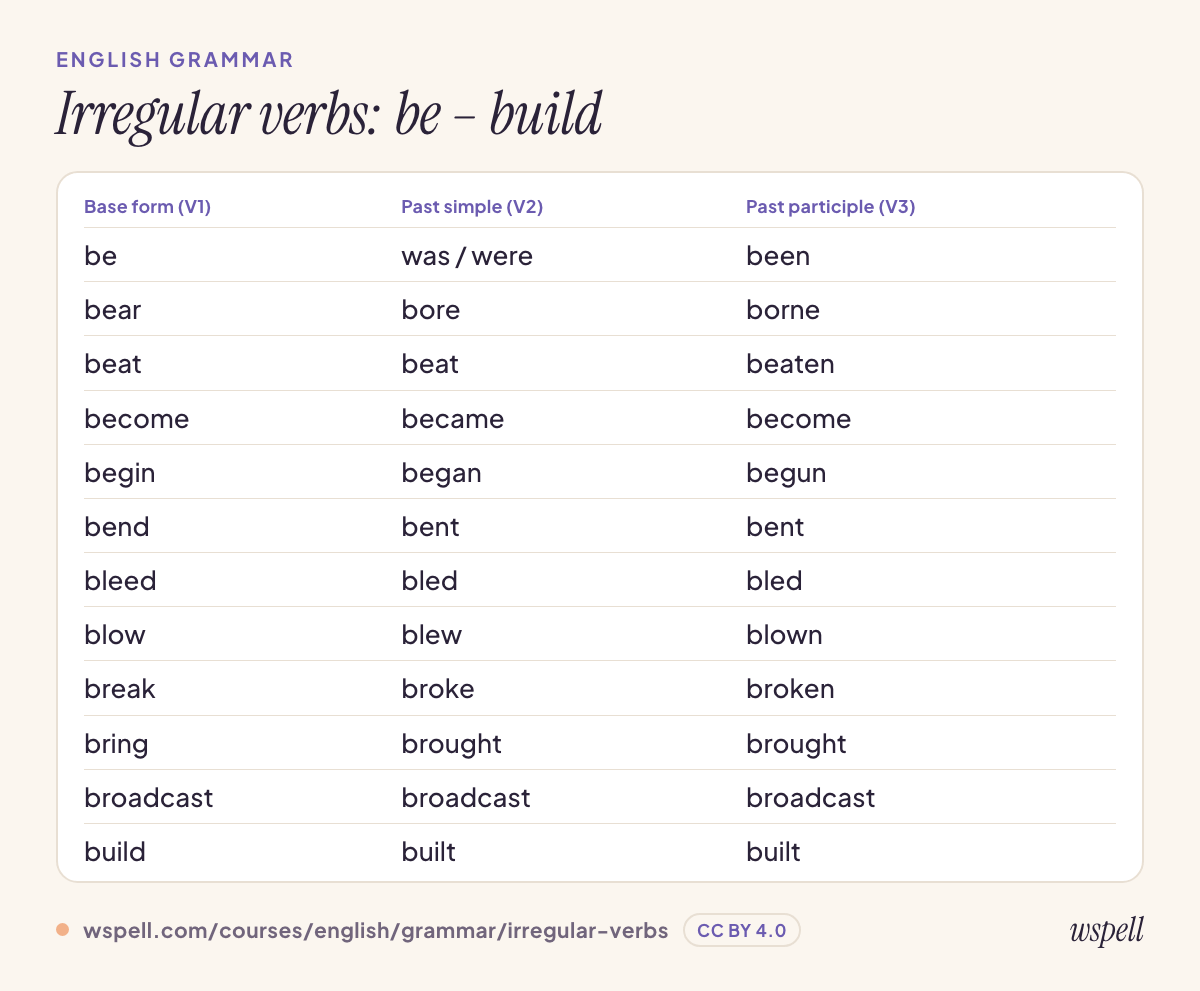
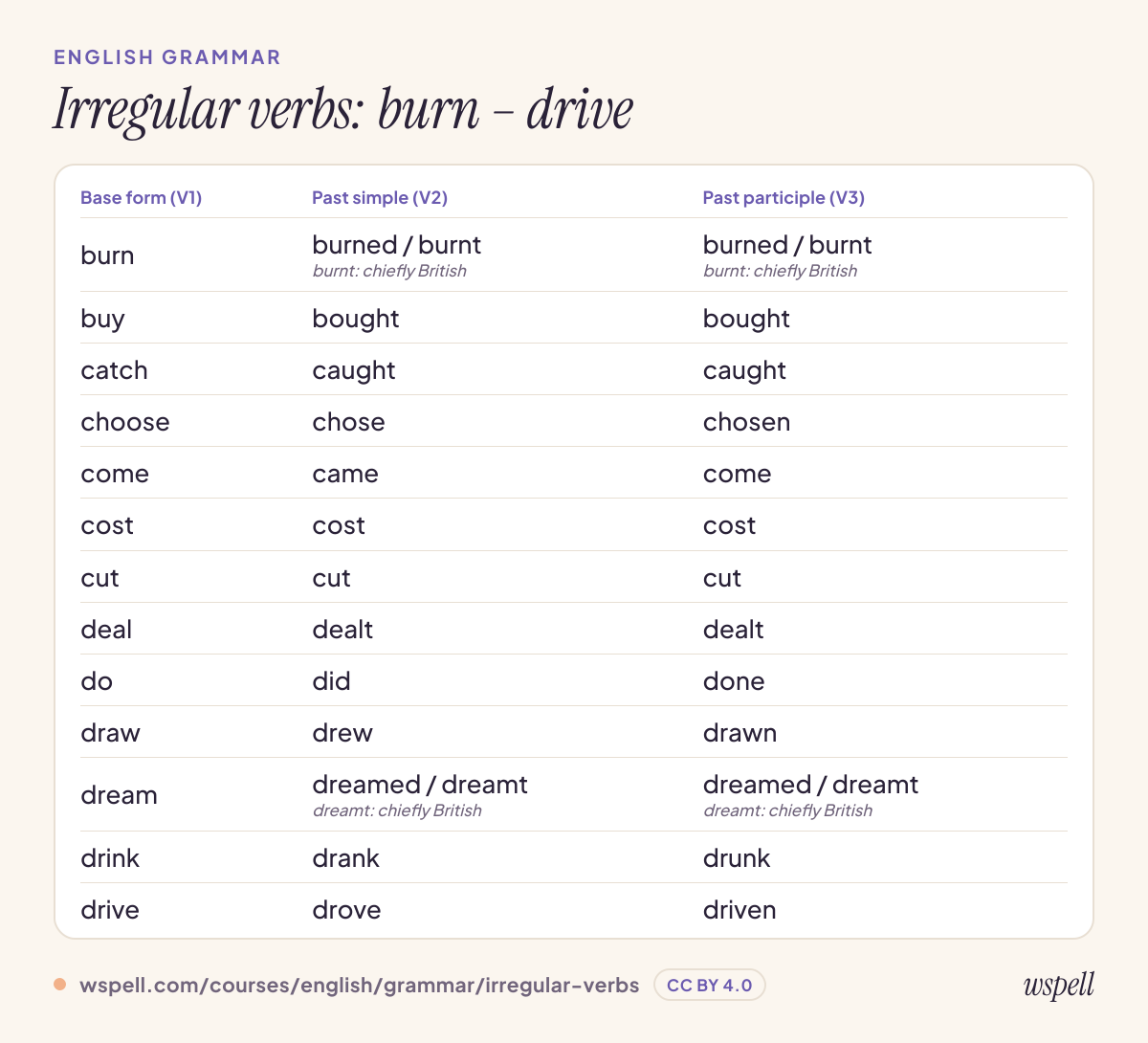
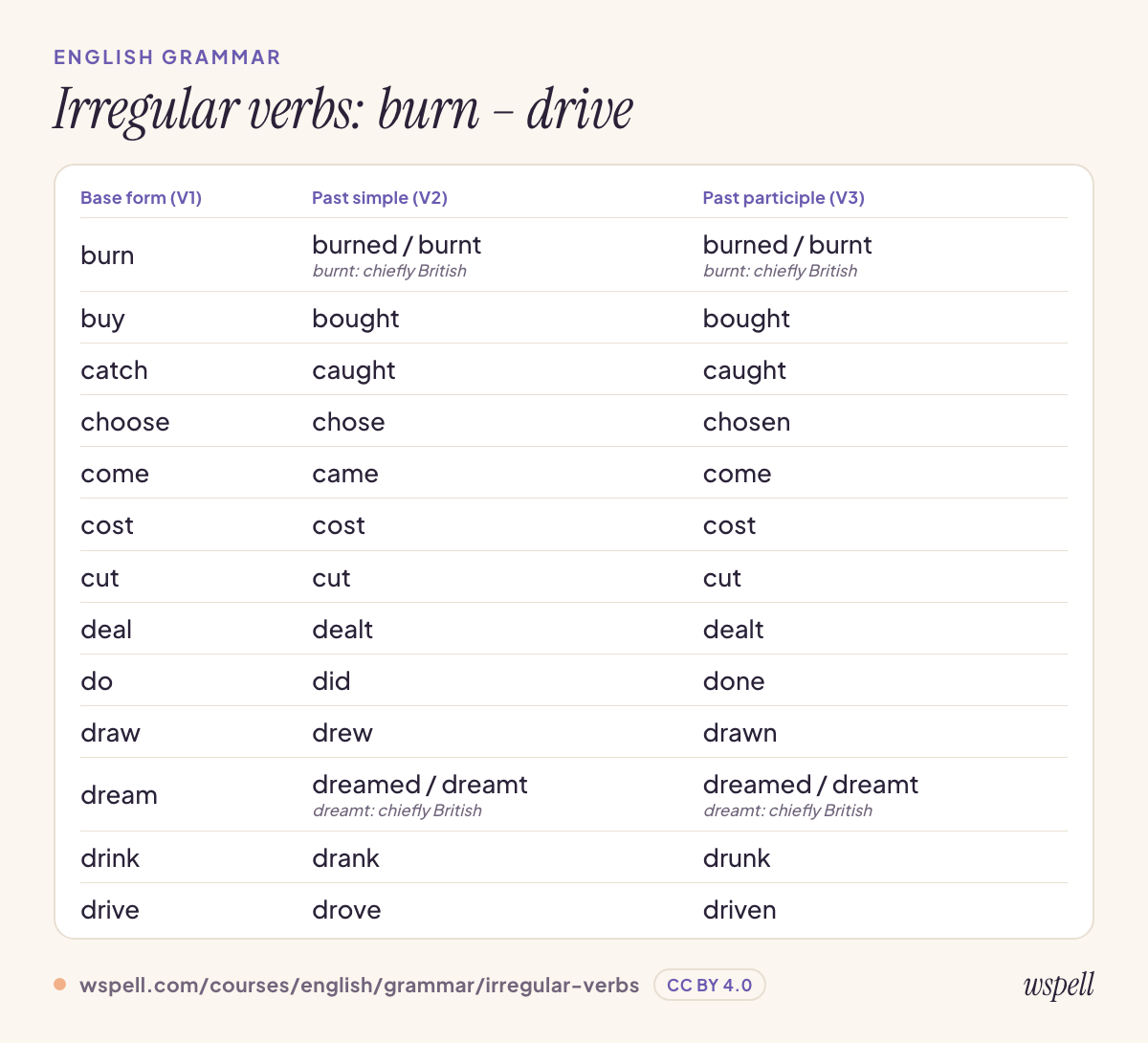
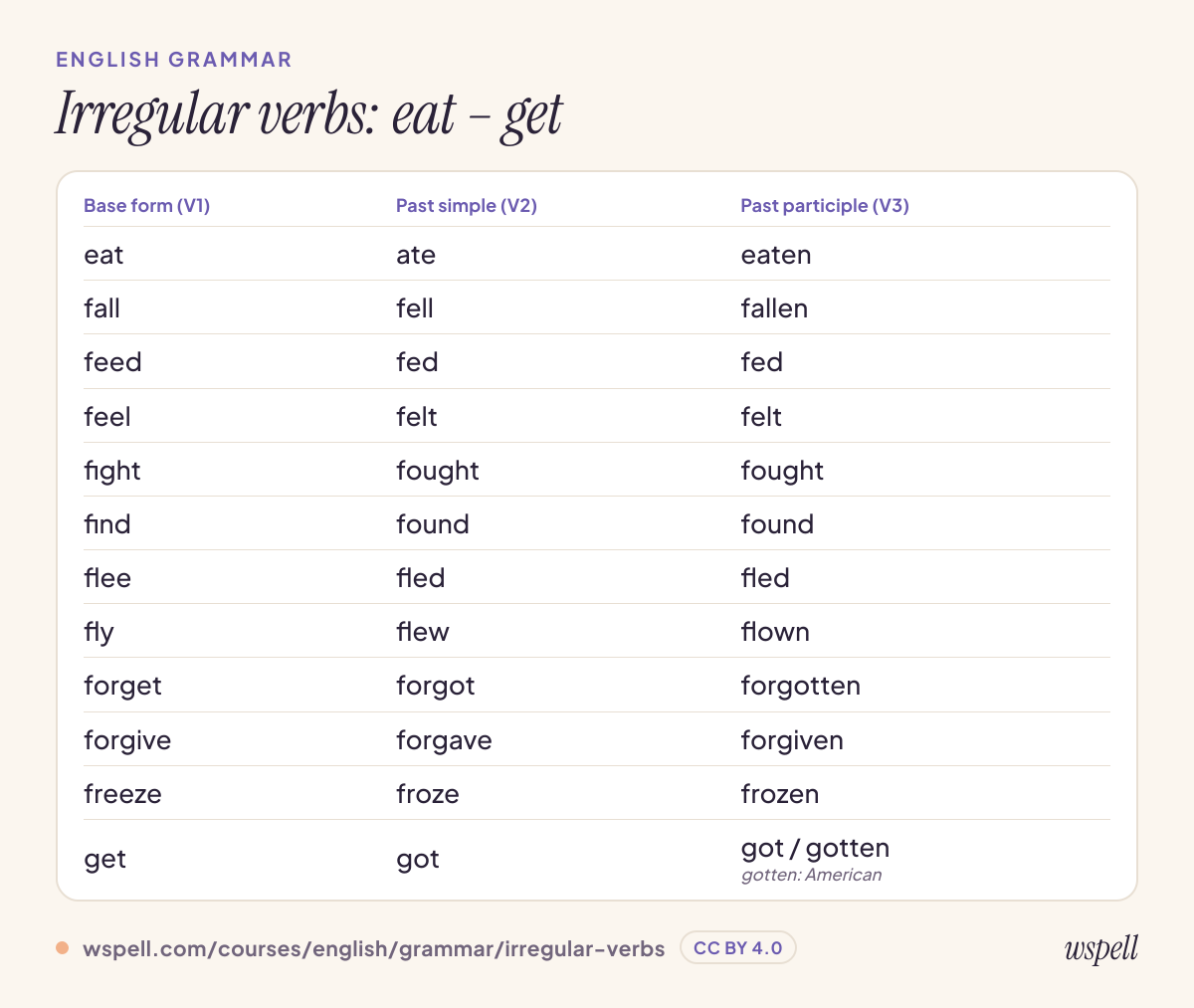
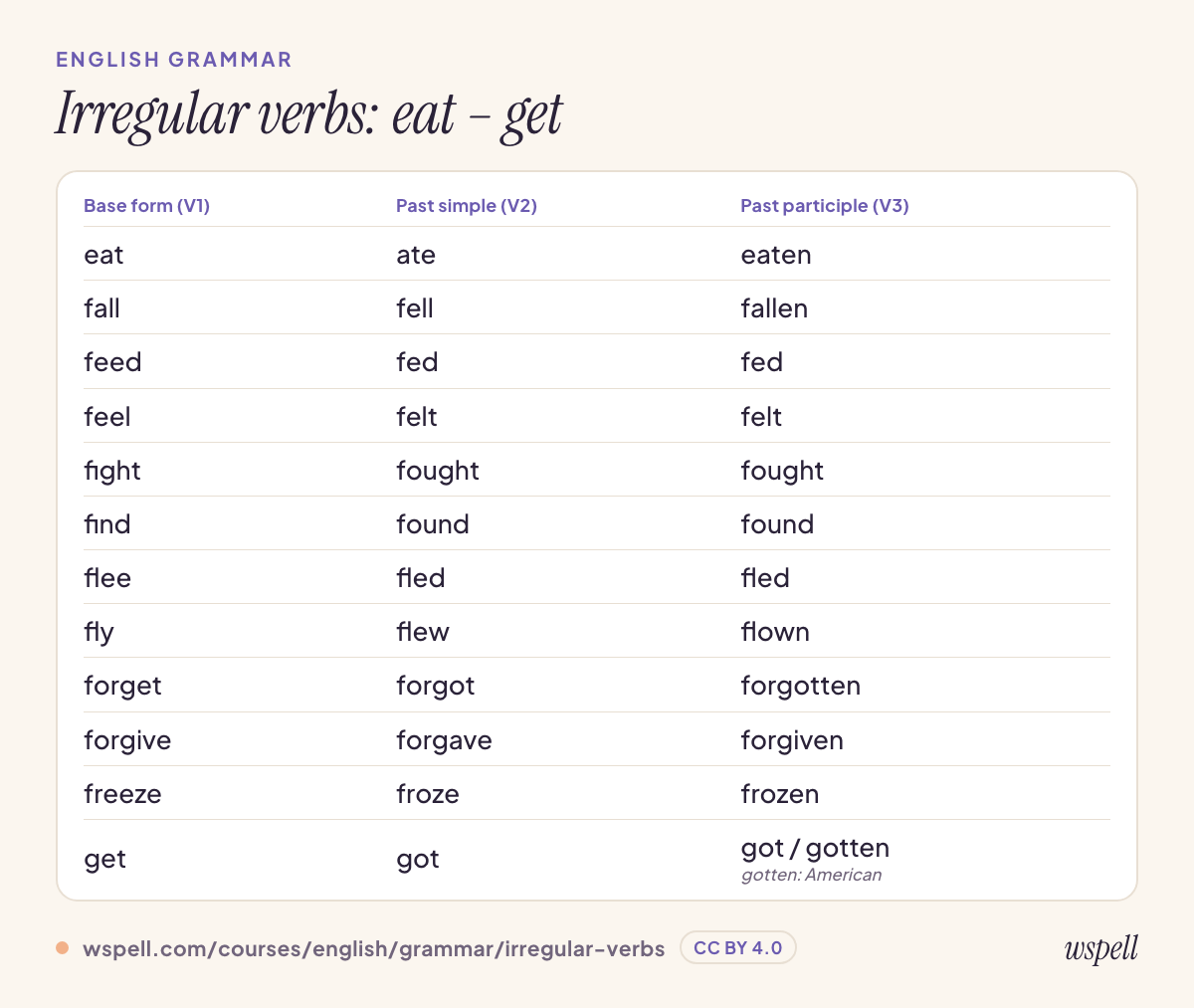
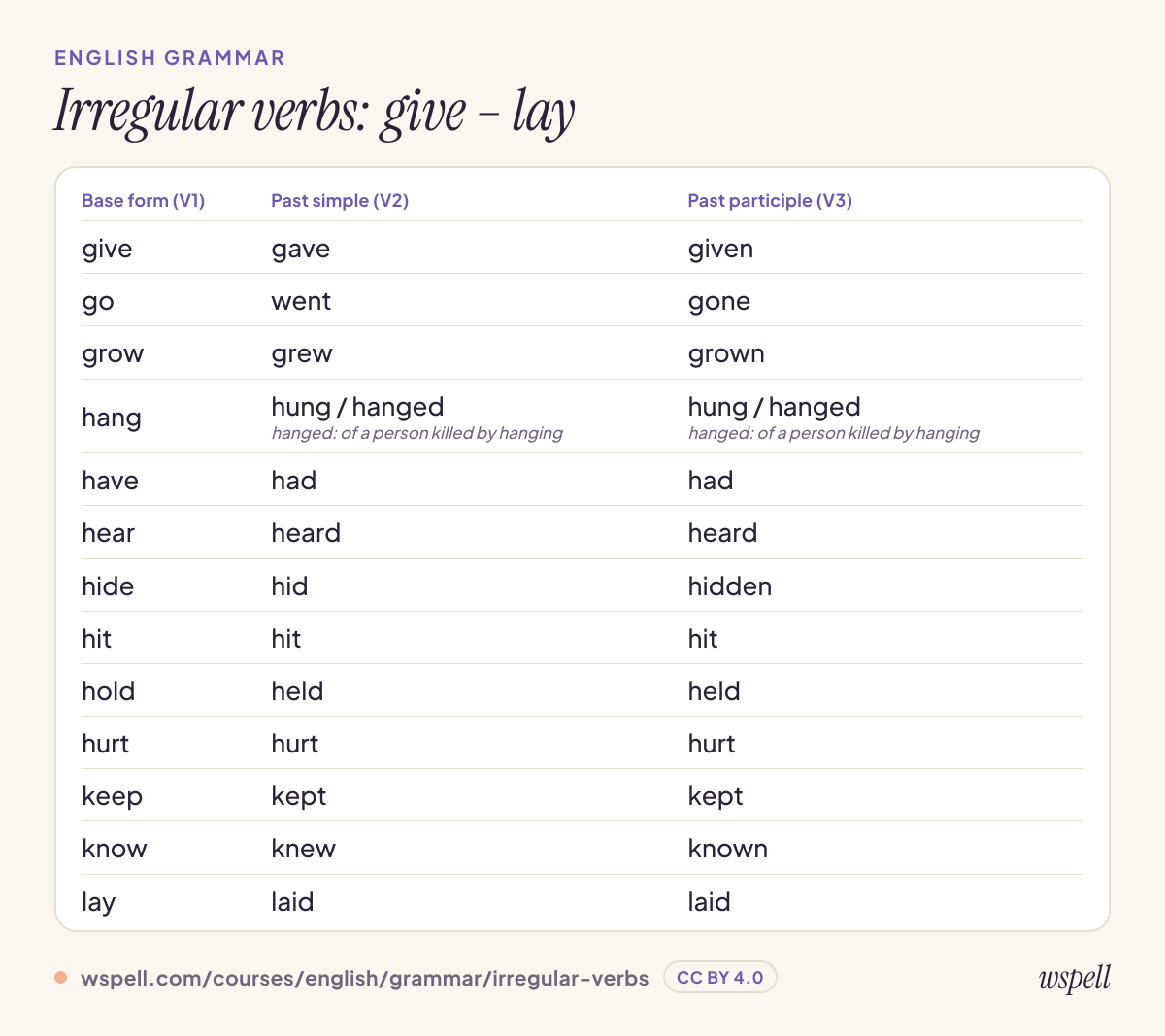
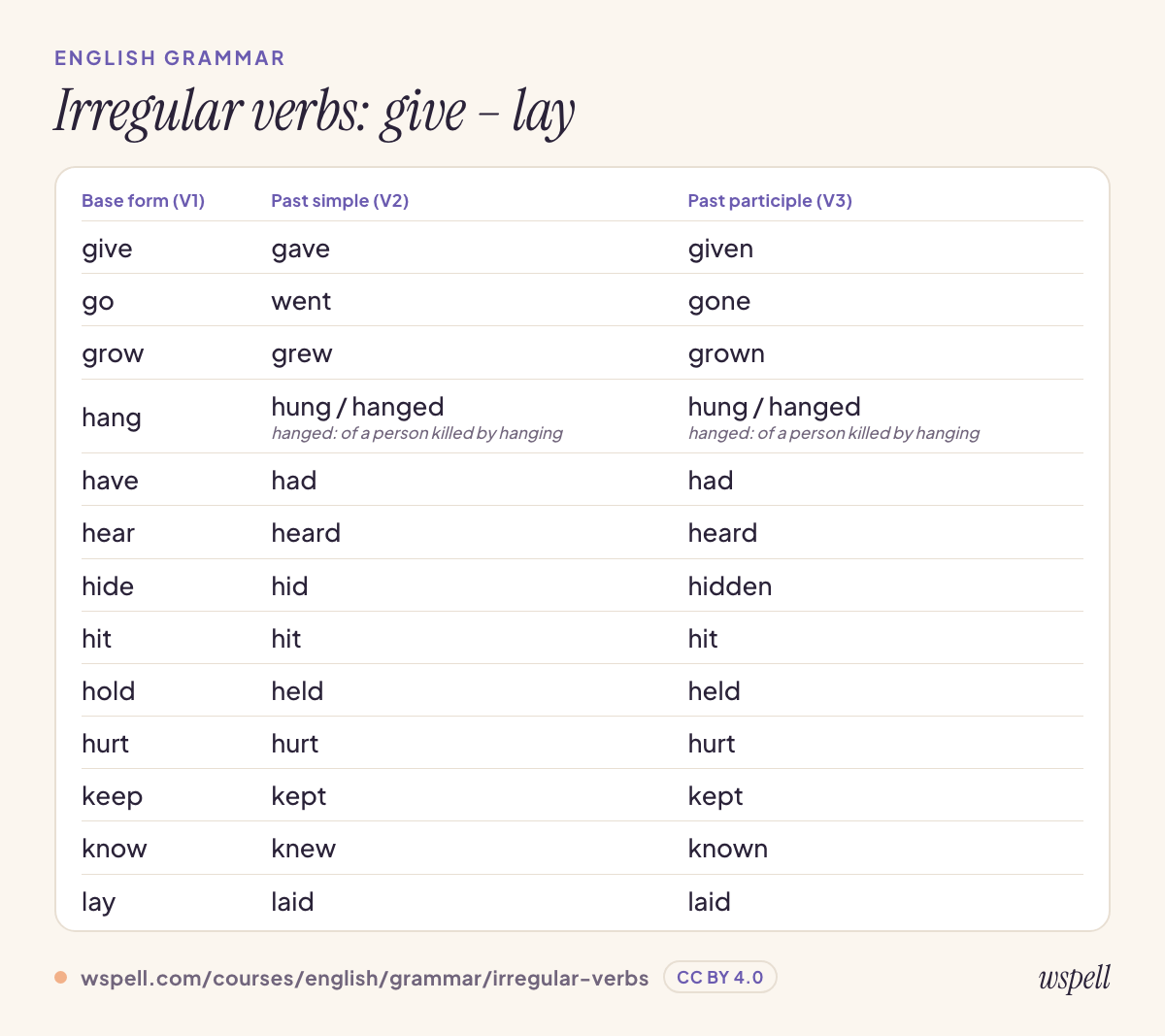
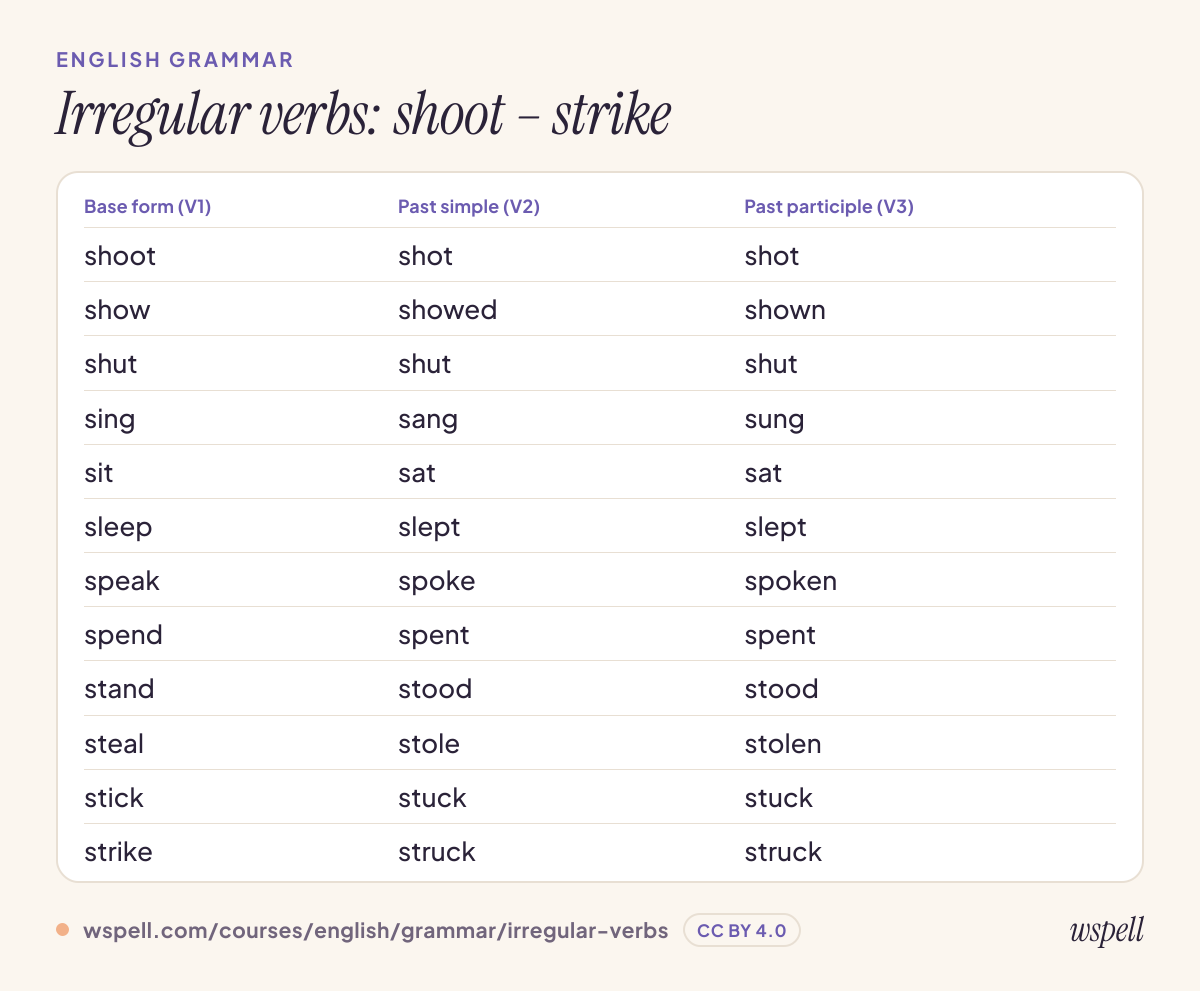
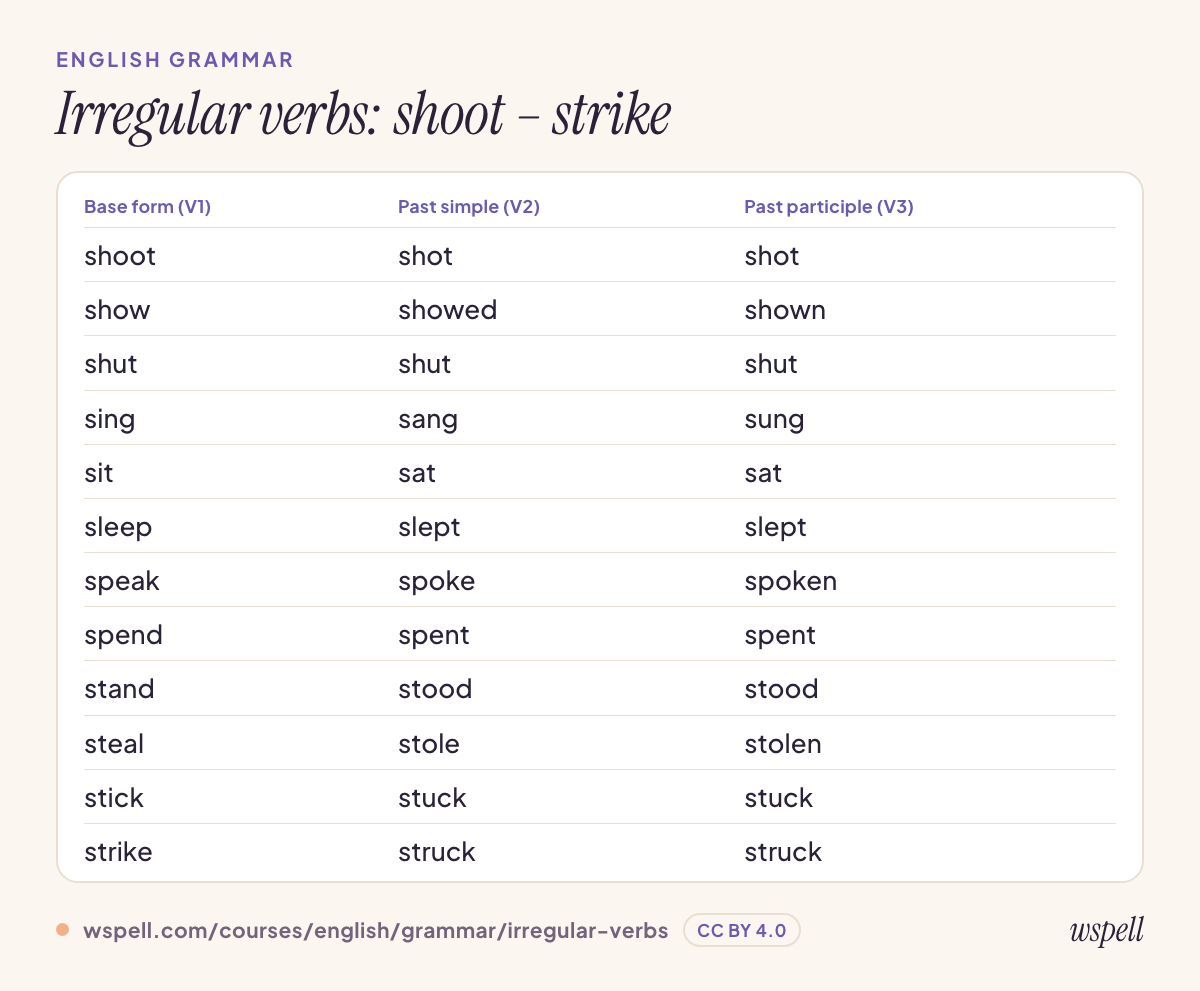
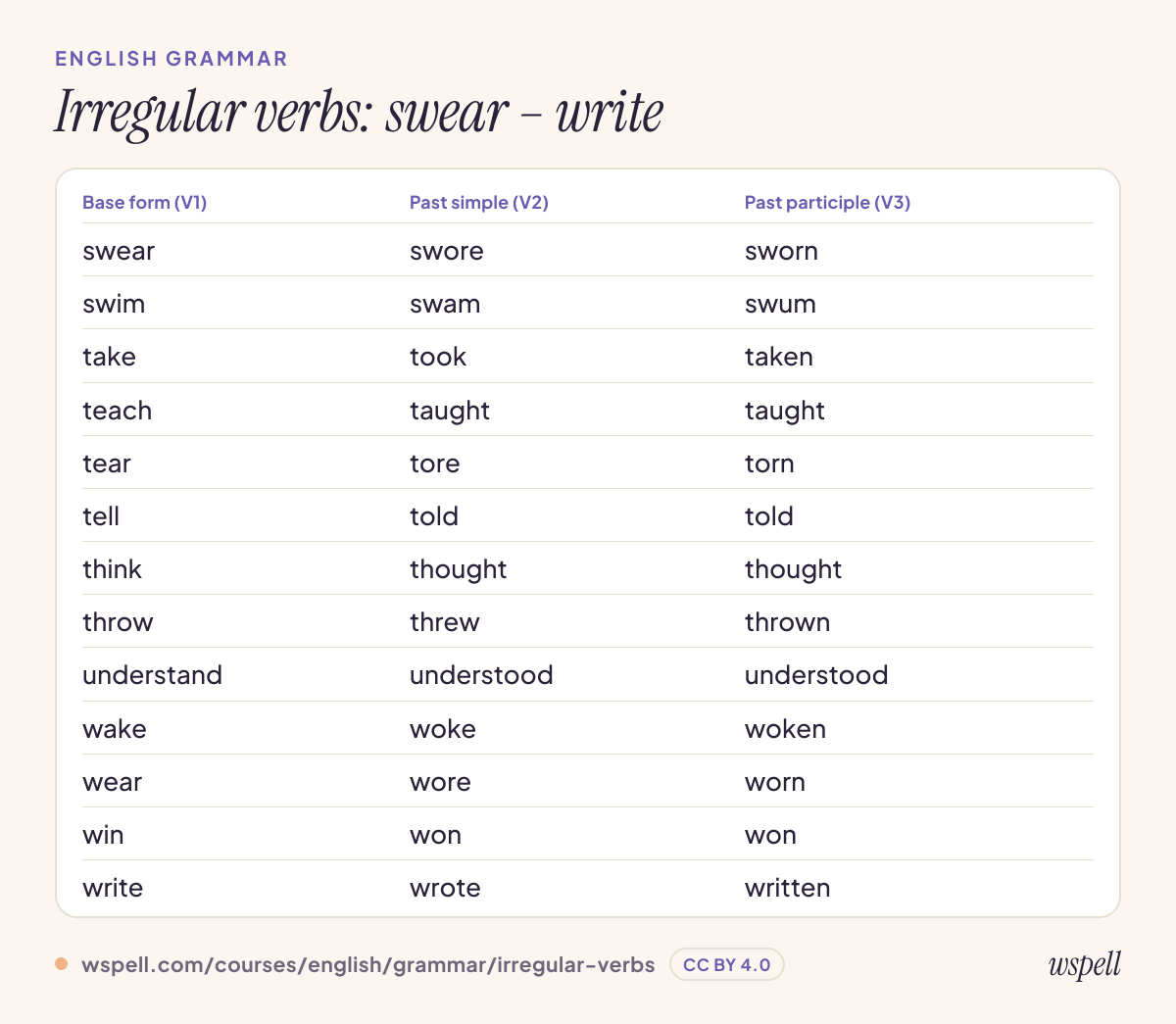
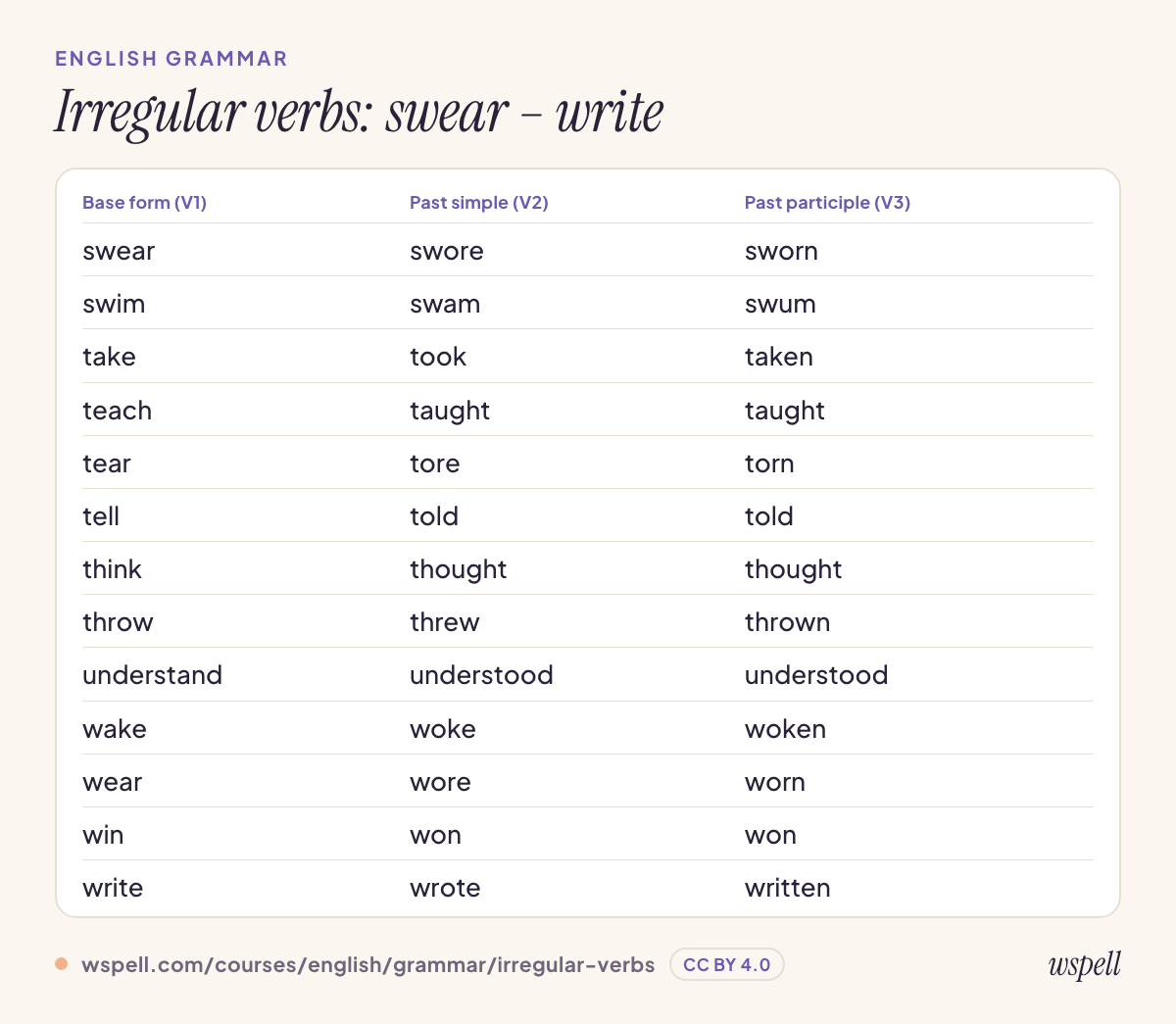
Under the main tables on this page sits a picture of each — keep one on your phone, share it or print it.
Free to share and adapt under CC BY 4.0 — credit wspell and link to this page. the licence
credit line to copy: English irregular verbs: 100 common verbs with all three forms — wspell, CC BY 4.0, https://wspell.com/courses/english/grammar/irregular-verbs
questions
How many irregular verbs are there in English?
Around 200 are in everyday use, prefixed ones such as understand, forgive and overcome included. The hundred on this page are among the most frequent and include most of the irregular verbs a general English course teaches.
Is it learned or learnt, dreamed or dreamt?
Both are correct. American English uses learned, dreamed, burned, spelled and smelled; British English uses these too, alongside learnt, dreamt, burnt, spelt and smelt. As a past participle, gotten is American (have gotten = have obtained or become); British English uses got. Both say have got for possession: I've got a car.
What is the difference between lie and lay?
Lay (laid, laid) means to put something down and takes an object: She laid the book on the table. Lie meaning to rest flat has the forms lie, lay, lain: He lay on the sofa. Lie meaning to say something untrue is regular: lie, lied, lied.
When do I use the past simple (V2) and when the past participle (V3)?
V2 is the past simple on its own: I wrote. V3 needs an auxiliary — have for the perfect tenses (I have written) and be for the passive (It was written).