grammar chart · English
The Present Perfect, and Present Perfect vs Past Simple
The Present Perfect is have or has with the past participle (V3): I have seen, she has seen. It links the past with now — a result you can see, an experience in your life, or a period that is not over. Once you name a finished time (yesterday, in 2019, last week), English switches to the Past Simple.
When to use the Present Perfect
Present Perfect: a past action that matters now
have/has + past participle links past to present: a past action with present relevance, experience, or an unfinished period (with since/for). Never used with a finished-time marker like yesterday.
- I have lost my keys.
- She has lived here for ten years.
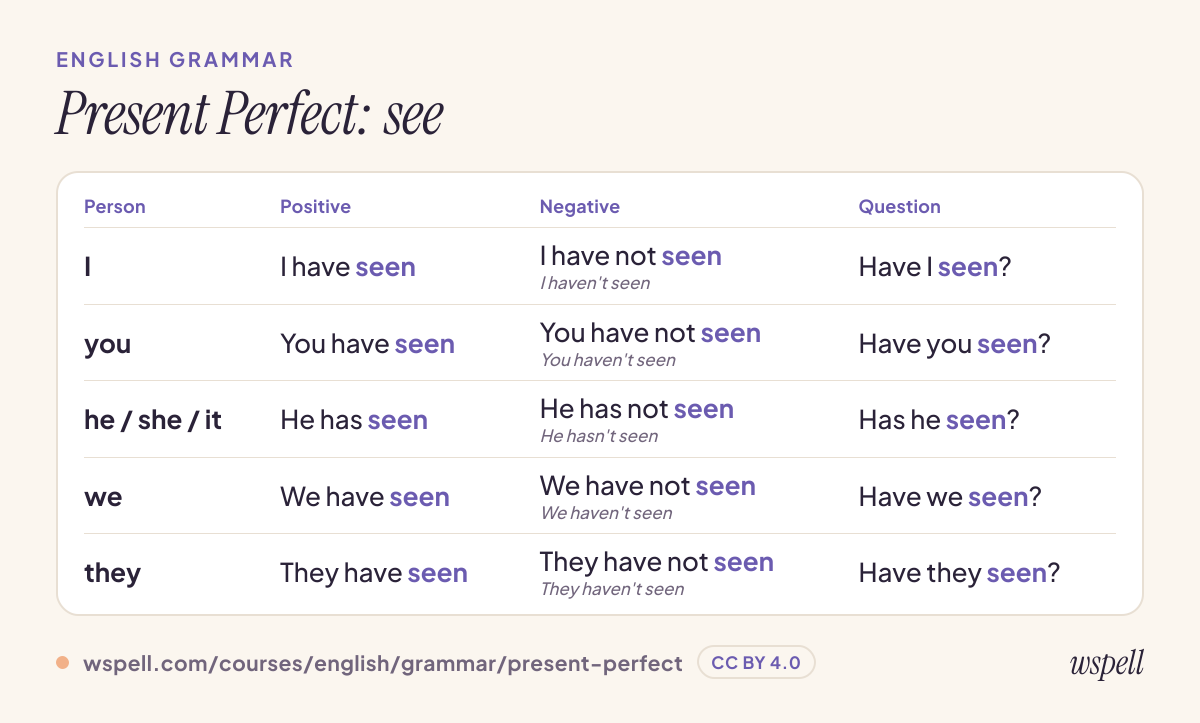
Have / has + past participle
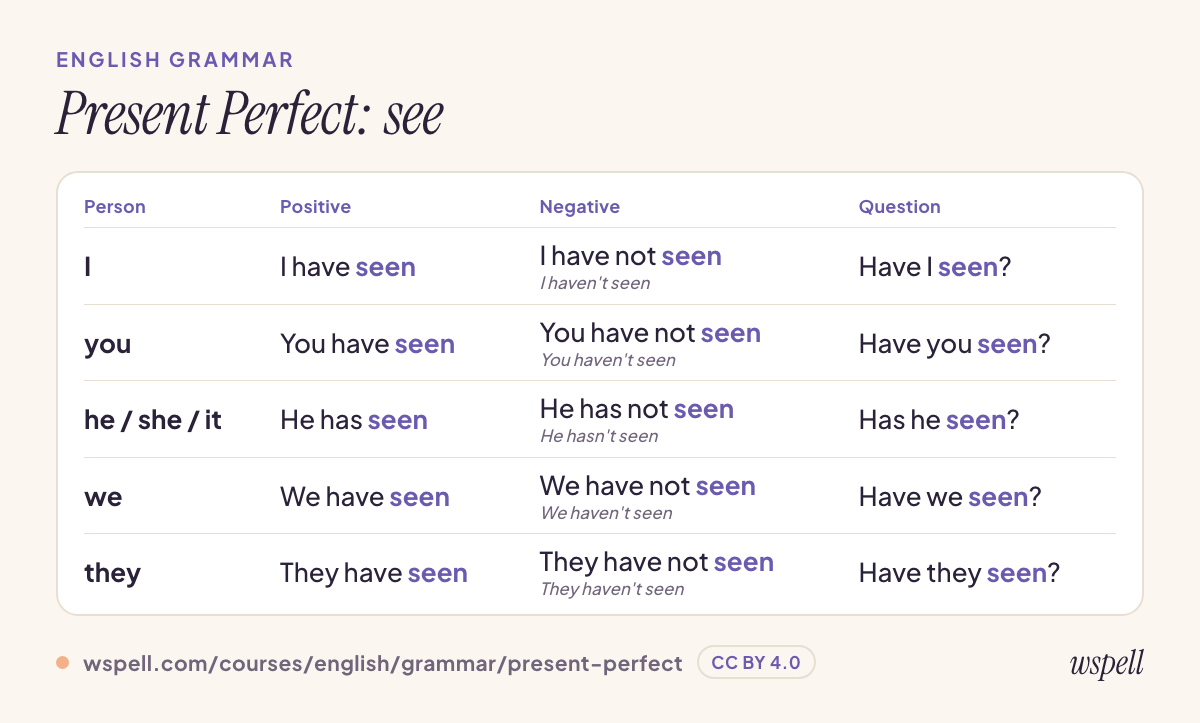
Under each negative is its short form: haven't, hasn't.
| Person | Positive | Negative | Question |
|---|---|---|---|
| I | I have seen | I have not seen I haven't seen | Have I seen? |
| you | You have seen | You have not seen You haven't seen | Have you seen? |
| he / she / it | He has seen | He has not seen He hasn't seen | Has he seen? |
| we | We have seen | We have not seen We haven't seen | Have we seen? |
| they | They have seen | They have not seen They haven't seen | Have they seen? |
Present Perfect or Past Simple?
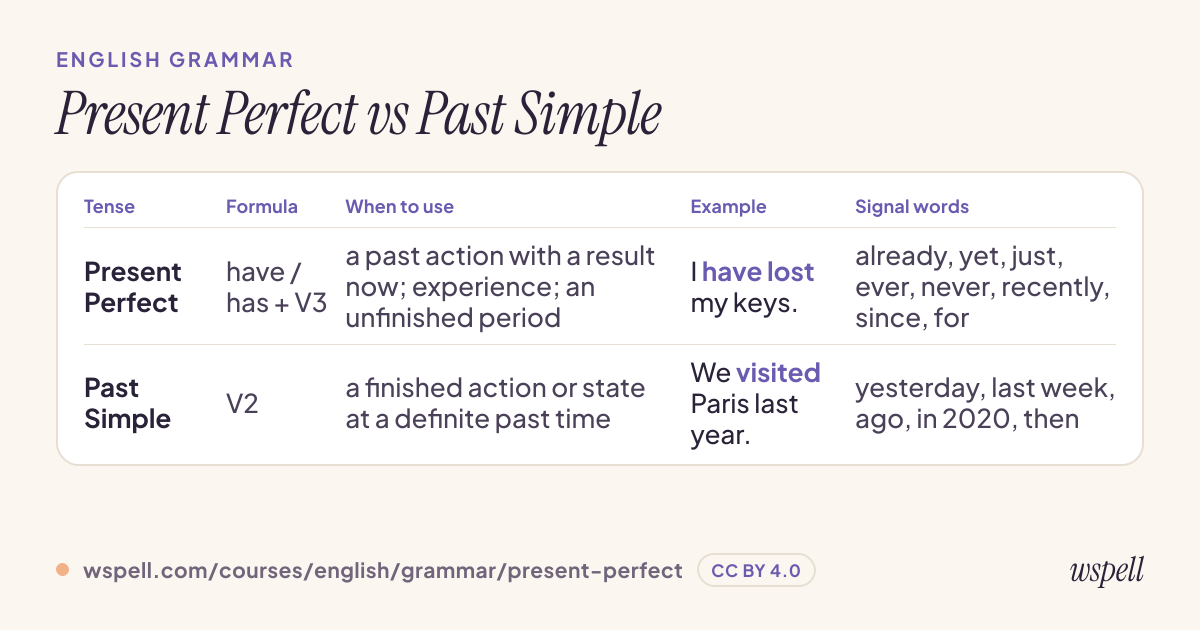
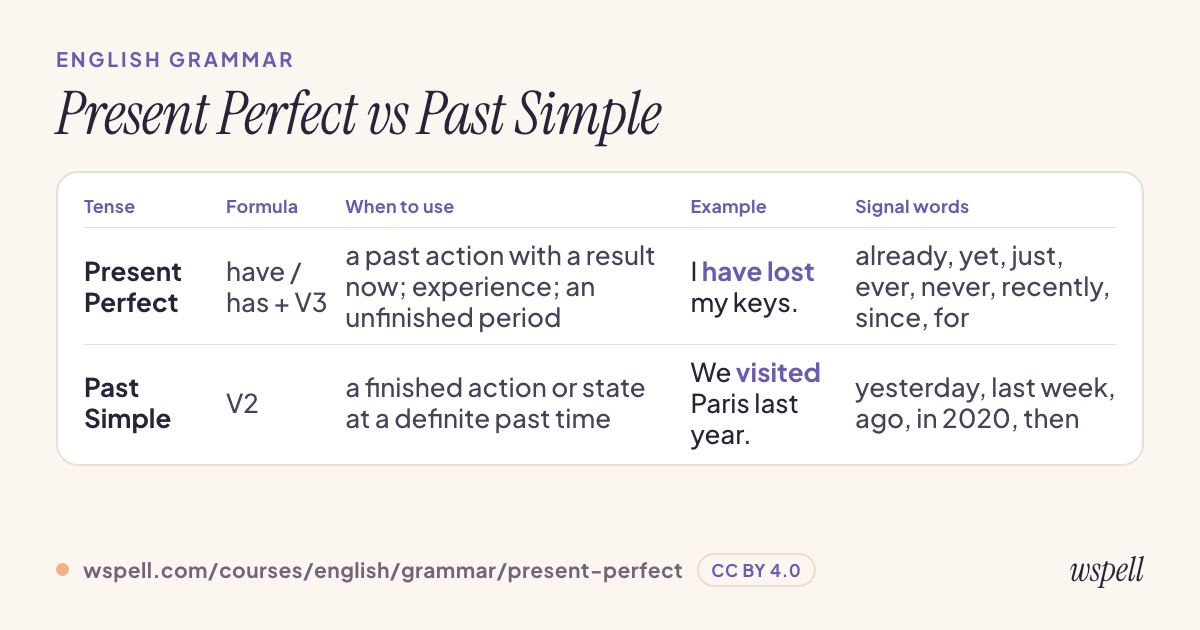
| Tense | Formula | When to use | Example | Signal words |
|---|---|---|---|---|
| Present Perfect | have / has + V3 | a past action with a result now; experience; an unfinished period | I have lost my keys. | already, yet, just, ever, never, recently, since, for |
| Past Simple | V2 | a finished action or state at a definite past time | We visited Paris last year. | yesterday, last week, ago, in 2020, then |
I've seen it or I saw it?
Use the present perfect for indefinite time or an ongoing period, the past simple once the time is specified or finished. 'I've seen it' (some time before now) vs 'I saw it yesterday' (definite past).
- Have you ever been to Japan? Yes, I went in 2019.
Since and for
Since or for?
With perfect tenses, 'for' measures a length of time (for two years) and 'since' names a starting point (since 2020, since Monday).
- We have known each other for years.
- He has been ill since Monday.
Present Perfect Continuous: have been + -ing
| Person | Positive | Negative | Question |
|---|---|---|---|
| I | I have been working | I have not been working I haven't been working | Have I been working? |
| you | You have been working | You have not been working You haven't been working | Have you been working? |
| he / she / it | He has been working | He has not been working He hasn't been working | Has he been working? |
| we | We have been working | We have not been working We haven't been working | Have we been working? |
| they | They have been working | They have not been working They haven't been working | Have they been working? |
Present Perfect Continuous: how long, up to now
have/has been + participle stresses the duration or continuity of an action up to now, or explains a present result. Contrast with the present perfect simple, which stresses completion/result.
- I have been waiting for an hour.
- Her eyes are red — she has been crying.
learn it step by step
save or print this chart
Under the main tables on this page sits a picture of each — keep one on your phone, share it or print it.
Free to share and adapt under CC BY 4.0 — credit wspell and link to this page. the licence
credit line to copy: The Present Perfect, and Present Perfect vs Past Simple — wspell, CC BY 4.0, https://wspell.com/courses/english/grammar/present-perfect
questions
When do I use the Present Perfect and when the Past Simple?
Use the Present Perfect when the time is not given or not finished: I have seen this film. Use the Past Simple when you say or know when it happened: I saw it yesterday. Have you ever been to Japan? — Yes, I went in 2019.
Can I say 'I have seen him yesterday'?
No. A finished-time word such as yesterday, last week, in 2019 or ago takes the Past Simple: I saw him yesterday.
Since or for?
For gives a length of time (for ten years, for two hours); since gives the starting point (since 2015, since Monday): I have known her for ten years / since 2015.
Do Americans use the Present Perfect with just, already and yet?
Both varieties say I've just seen it and Have you eaten yet? In American English the Past Simple is also common with these words: I just saw it. Did you eat yet?