grammar chart · Spanish
Spanish verb conjugation chart
Two tables per verb (poder has one): the present, the preterite, the imperfect, the future and the conditional side by side, then the present subjunctive and the imperative. The three regular models — hablar, comer and vivir — show the endings every regular verb takes; ser, estar, ir, tener, hacer and poder are the irregular verbs you need from the first week. The present perfect, built from haber and the participle, closes the page.
The endings, tense by tense
| Person | -ar verbs Present | -er verbs Present | -ir verbs Present | -ar verbs Preterite | -er and -ir verbs Preterite | -ar verbs Imperfect | -er and -ir verbs Imperfect |
|---|---|---|---|---|---|---|---|
| yo | -o hablo | -o como | -o vivo | -é hablé | -í comí · viví | -aba hablaba | -ía comía · vivía |
| tú | -as hablas | -es comes | -es vives | -aste hablaste | -iste comiste · viviste | -abas hablabas | -ías comías · vivías |
| él, ella, usted | -a habla | -e come | -e vive | -ó habló | -ió comió · vivió | -aba hablaba | -ía comía · vivía |
| nosotros, nosotras | -amos hablamos | -emos comemos | -imos vivimos | -amos hablamos | -imos comimos · vivimos | -ábamos hablábamos | -íamos comíamos · vivíamos |
| vosotros, vosotras | -áis habláis | -éis coméis | -ís vivís | -asteis hablasteis | -isteis comisteis · vivisteis | -abais hablabais | -íais comíais · vivíais |
| ellos, ellas, ustedes | -an hablan | -en comen | -en viven | -aron hablaron | -ieron comieron · vivieron | -aban hablaban | -ían comían · vivían |
| Person | All verbs Future | All verbs Conditional | -ar verbs Present subjunctive | -er and -ir verbs Present subjunctive |
|---|---|---|---|---|
| yo | -é hablaré · comeré · viviré | -ía hablaría · comería · viviría | -e hable | -a coma · viva |
| tú | -ás hablarás · comerás · vivirás | -ías hablarías · comerías · vivirías | -es hables | -as comas · vivas |
| él, ella, usted | -á hablará · comerá · vivirá | -ía hablaría · comería · viviría | -e hable | -a coma · viva |
| nosotros, nosotras | -emos hablaremos · comeremos · viviremos | -íamos hablaríamos · comeríamos · viviríamos | -emos hablemos | -amos comamos · vivamos |
| vosotros, vosotras | -éis hablaréis · comeréis · viviréis | -íais hablaríais · comeríais · viviríais | -éis habléis | -áis comáis · viváis |
| ellos, ellas, ustedes | -án hablarán · comerán · vivirán | -ían hablarían · comerían · vivirían | -en hablen | -an coman · vivan |
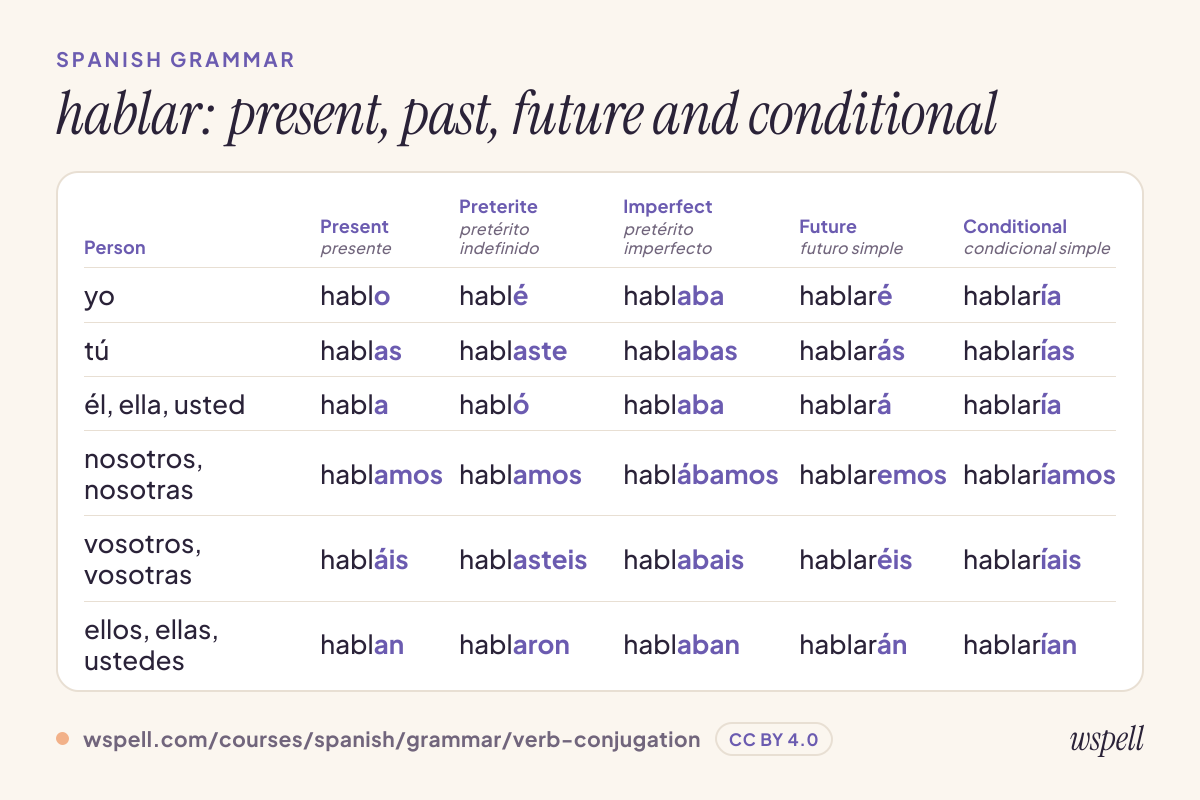
hablar (to speak): a regular -ar verb
| Person | Present presente | Preterite pretérito indefinido | Imperfect pretérito imperfecto | Future futuro simple | Conditional condicional simple |
|---|---|---|---|---|---|
| yo | hablo | hablé | hablaba | hablaré | hablaría |
| tú | hablas | hablaste | hablabas | hablarás | hablarías |
| él, ella, usted | habla | habló | hablaba | hablará | hablaría |
| nosotros, nosotras | hablamos | hablamos | hablábamos | hablaremos | hablaríamos |
| vosotros, vosotras | habláis | hablasteis | hablabais | hablaréis | hablaríais |
| ellos, ellas, ustedes | hablan | hablaron | hablaban | hablarán | hablarían |
| Person | Present subjunctive presente de subjuntivo | Affirmative imperativo afirmativo |
|---|---|---|
| yo | hable | — |
| tú | hables | habla |
| él, ella, usted | hable | hable usted |
| nosotros, nosotras | hablemos | hablemos |
| vosotros, vosotras | habléis | hablad |
| ellos, ellas, ustedes | hablen | hablen ustedes |
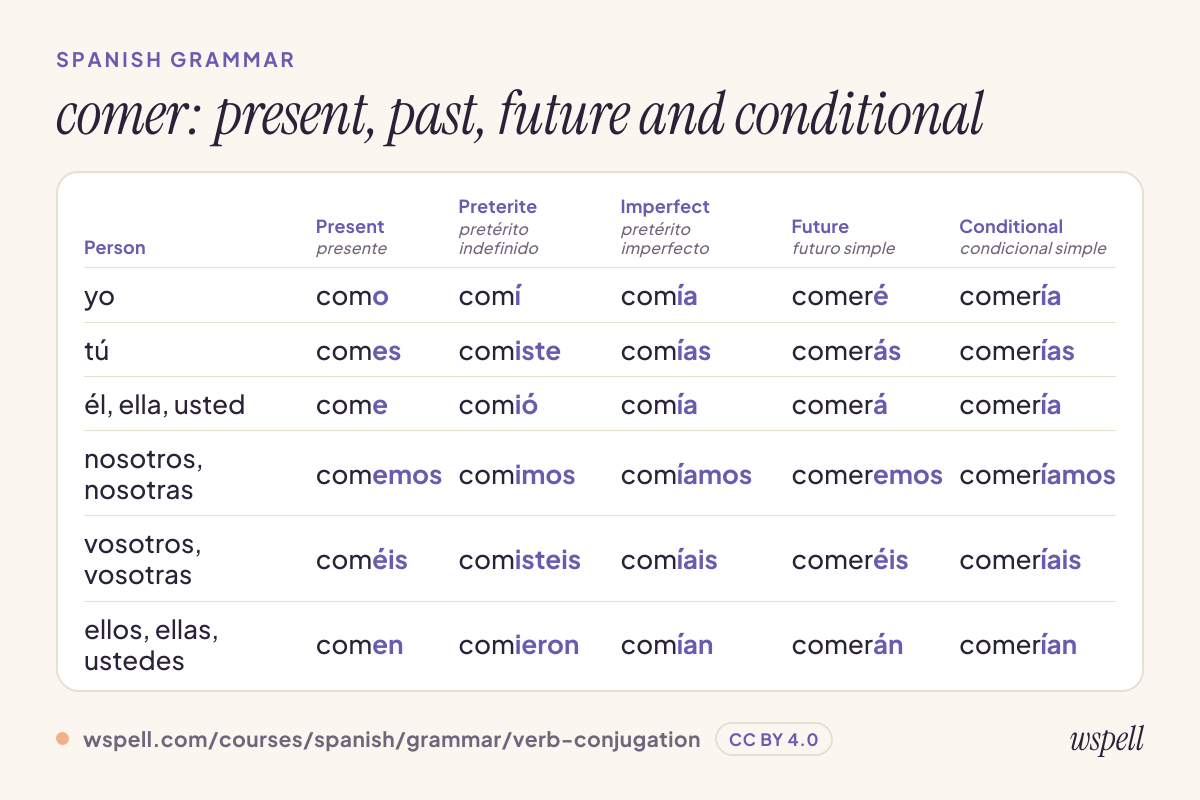
comer (to eat): a regular -er verb
| Person | Present presente | Preterite pretérito indefinido | Imperfect pretérito imperfecto | Future futuro simple | Conditional condicional simple |
|---|---|---|---|---|---|
| yo | como | comí | comía | comeré | comería |
| tú | comes | comiste | comías | comerás | comerías |
| él, ella, usted | come | comió | comía | comerá | comería |
| nosotros, nosotras | comemos | comimos | comíamos | comeremos | comeríamos |
| vosotros, vosotras | coméis | comisteis | comíais | comeréis | comeríais |
| ellos, ellas, ustedes | comen | comieron | comían | comerán | comerían |
| Person | Present subjunctive presente de subjuntivo | Affirmative imperativo afirmativo |
|---|---|---|
| yo | coma | — |
| tú | comas | come |
| él, ella, usted | coma | coma usted |
| nosotros, nosotras | comamos | comamos |
| vosotros, vosotras | comáis | comed |
| ellos, ellas, ustedes | coman | coman ustedes |
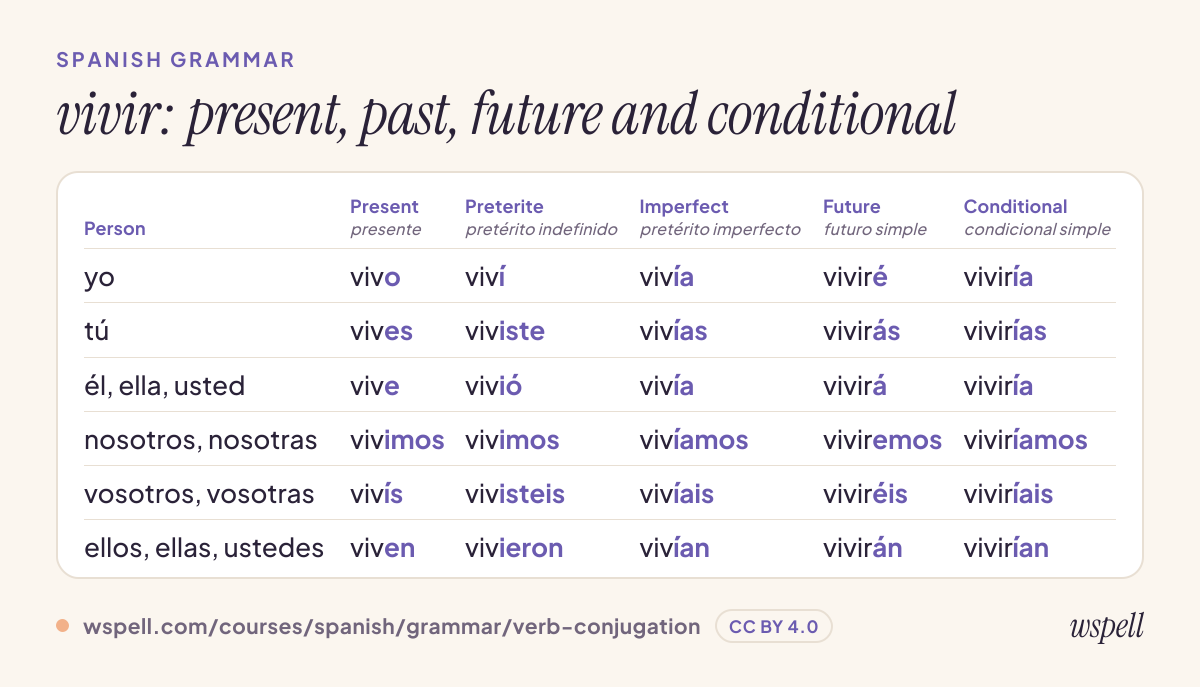
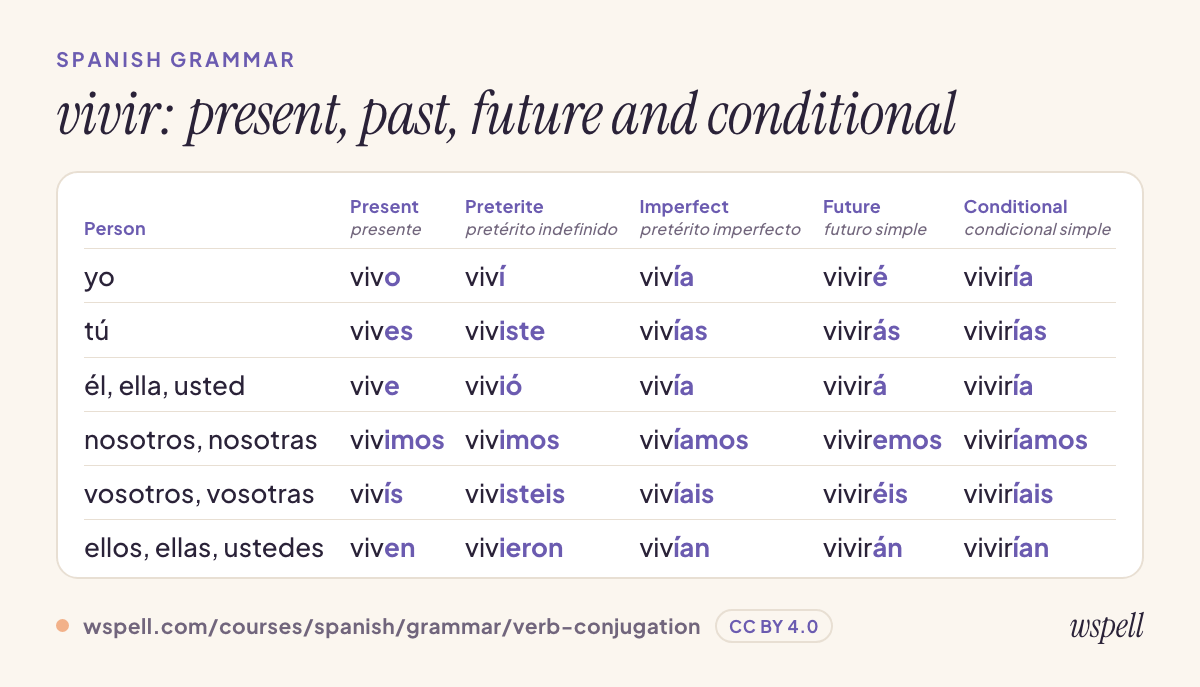
vivir (to live): a regular -ir verb
| Person | Present presente | Preterite pretérito indefinido | Imperfect pretérito imperfecto | Future futuro simple | Conditional condicional simple |
|---|---|---|---|---|---|
| yo | vivo | viví | vivía | viviré | viviría |
| tú | vives | viviste | vivías | vivirás | vivirías |
| él, ella, usted | vive | vivió | vivía | vivirá | viviría |
| nosotros, nosotras | vivimos | vivimos | vivíamos | viviremos | viviríamos |
| vosotros, vosotras | vivís | vivisteis | vivíais | viviréis | viviríais |
| ellos, ellas, ustedes | viven | vivieron | vivían | vivirán | vivirían |
| Person | Present subjunctive presente de subjuntivo | Affirmative imperativo afirmativo |
|---|---|---|
| yo | viva | — |
| tú | vivas | vive |
| él, ella, usted | viva | viva usted |
| nosotros, nosotras | vivamos | vivamos |
| vosotros, vosotras | viváis | vivid |
| ellos, ellas, ustedes | vivan | vivan ustedes |
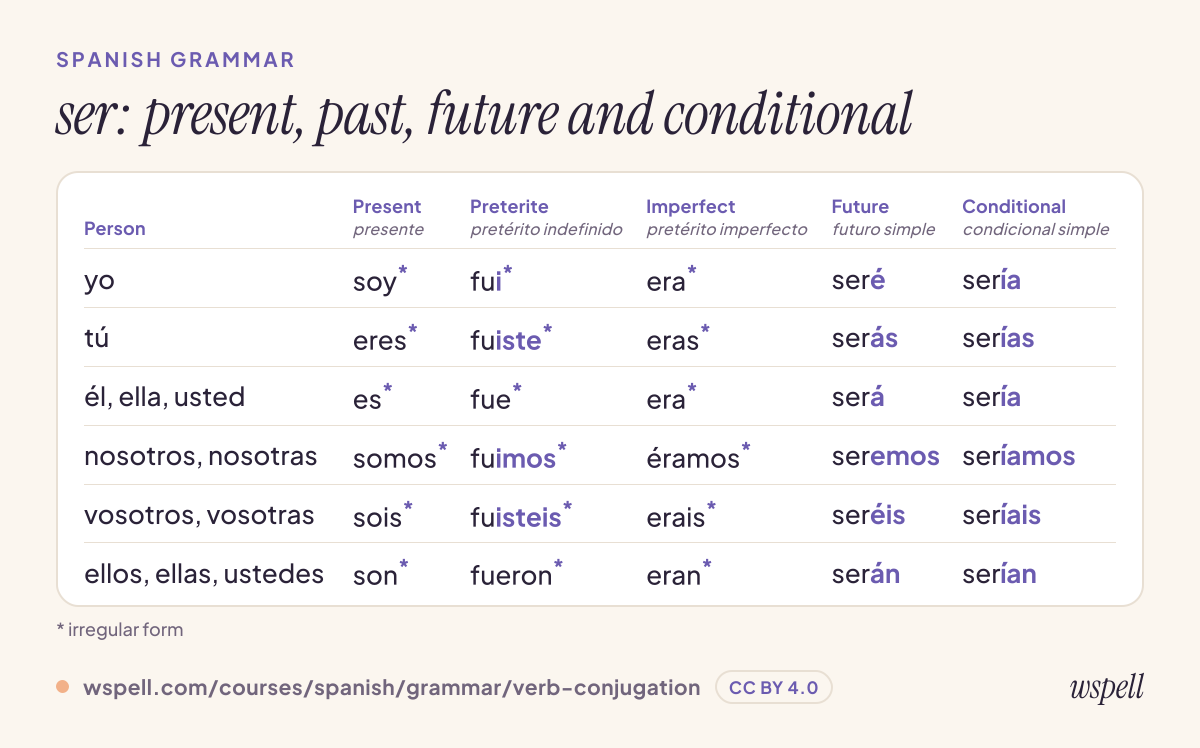
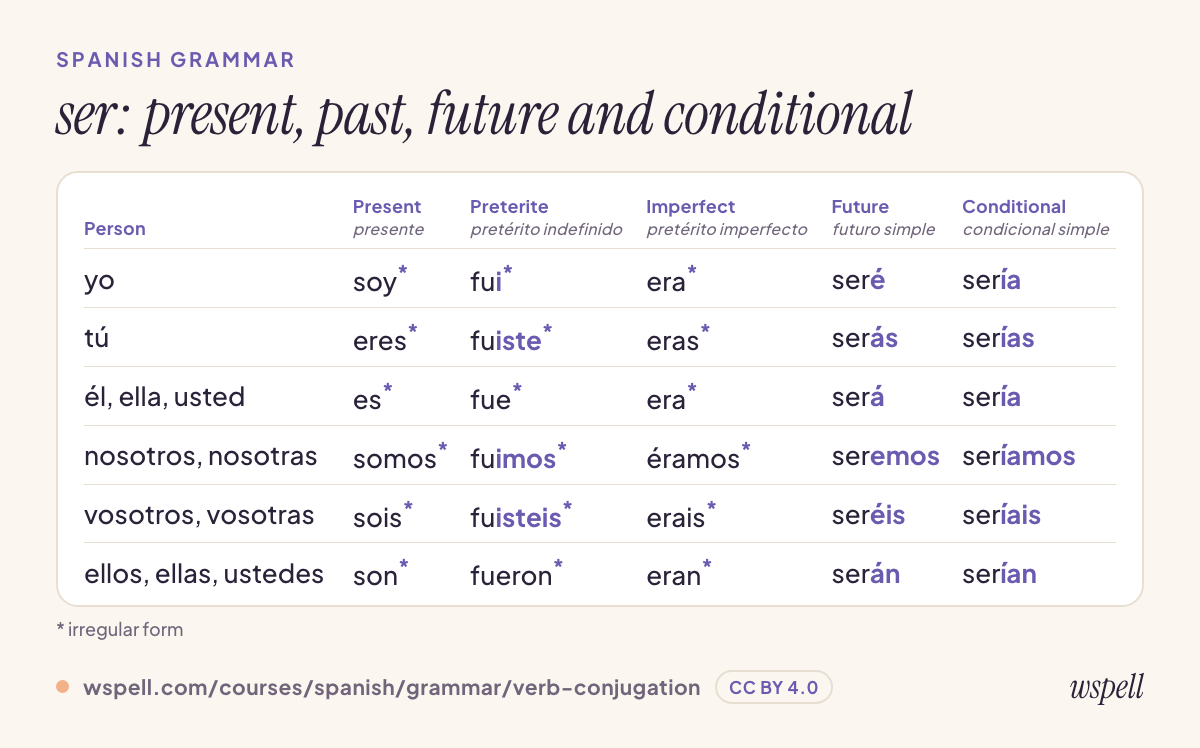
ser (to be)
| Person | Present presente | Preterite pretérito indefinido | Imperfect pretérito imperfecto | Future futuro simple | Conditional condicional simple |
|---|---|---|---|---|---|
| yo | soy* | fui* | era* | seré | sería |
| tú | eres* | fuiste* | eras* | serás | serías |
| él, ella, usted | es* | fue* | era* | será | sería |
| nosotros, nosotras | somos* | fuimos* | éramos* | seremos | seríamos |
| vosotros, vosotras | sois* | fuisteis* | erais* | seréis | seríais |
| ellos, ellas, ustedes | son* | fueron* | eran* | serán | serían |
* irregular form
| Person | Present subjunctive presente de subjuntivo | Affirmative imperativo afirmativo |
|---|---|---|
| yo | sea* | — |
| tú | seas* | sé |
| él, ella, usted | sea* | sea usted |
| nosotros, nosotras | seamos* | seamos |
| vosotros, vosotras | seáis* | sed |
| ellos, ellas, ustedes | sean* | sean ustedes |
* irregular form in the present subjunctive
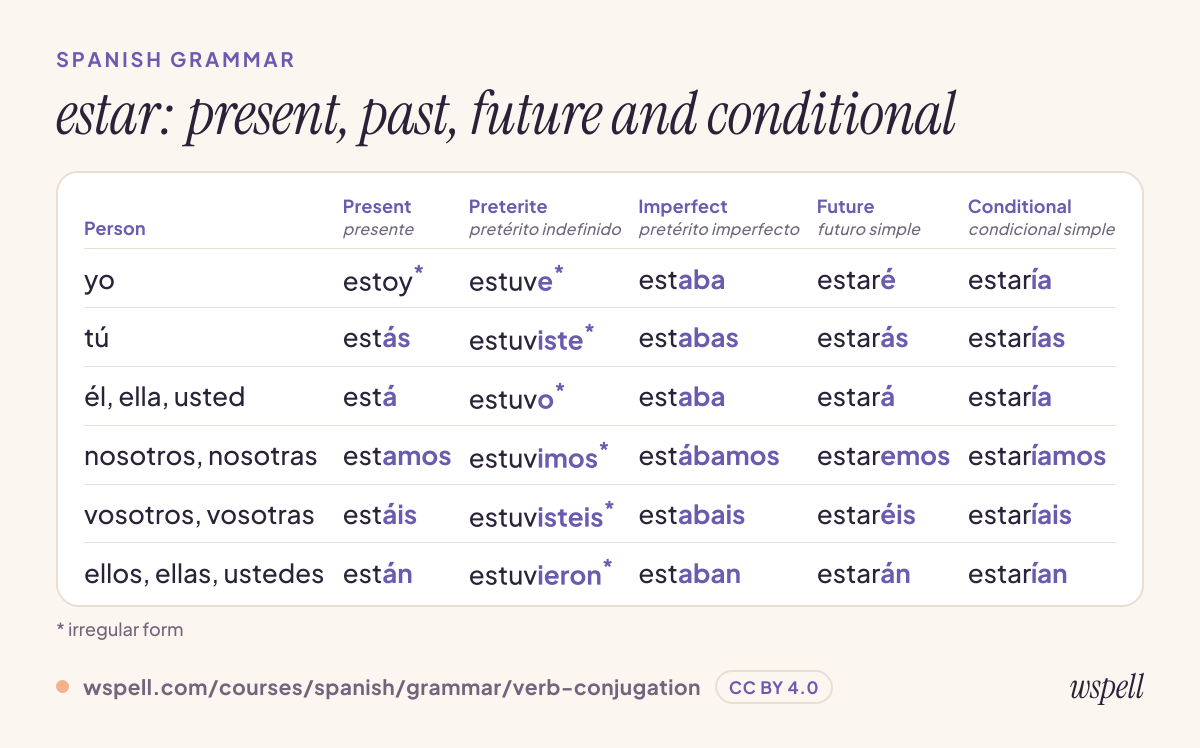
estar (to be)
| Person | Present presente | Preterite pretérito indefinido | Imperfect pretérito imperfecto | Future futuro simple | Conditional condicional simple |
|---|---|---|---|---|---|
| yo | estoy* | estuve* | estaba | estaré | estaría |
| tú | estás | estuviste* | estabas | estarás | estarías |
| él, ella, usted | está | estuvo* | estaba | estará | estaría |
| nosotros, nosotras | estamos | estuvimos* | estábamos | estaremos | estaríamos |
| vosotros, vosotras | estáis | estuvisteis* | estabais | estaréis | estaríais |
| ellos, ellas, ustedes | están | estuvieron* | estaban | estarán | estarían |
* irregular form
| Person | Present subjunctive presente de subjuntivo | Affirmative imperativo afirmativo |
|---|---|---|
| yo | esté | — |
| tú | estés | está |
| él, ella, usted | esté | esté usted |
| nosotros, nosotras | estemos | estemos |
| vosotros, vosotras | estéis | estad |
| ellos, ellas, ustedes | estén | estén ustedes |
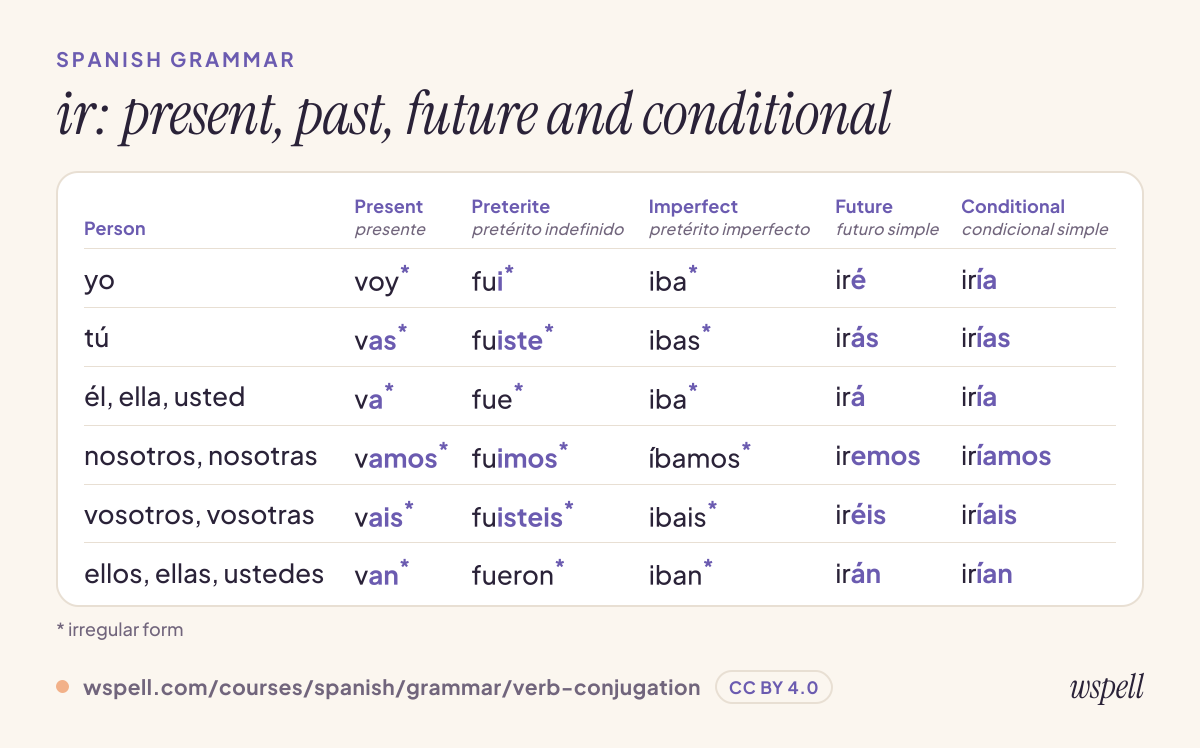
ir (to go)
| Person | Present presente | Preterite pretérito indefinido | Imperfect pretérito imperfecto | Future futuro simple | Conditional condicional simple |
|---|---|---|---|---|---|
| yo | voy* | fui* | iba* | iré | iría |
| tú | vas* | fuiste* | ibas* | irás | irías |
| él, ella, usted | va* | fue* | iba* | irá | iría |
| nosotros, nosotras | vamos* | fuimos* | íbamos* | iremos | iríamos |
| vosotros, vosotras | vais* | fuisteis* | ibais* | iréis | iríais |
| ellos, ellas, ustedes | van* | fueron* | iban* | irán | irían |
* irregular form
| Person | Present subjunctive presente de subjuntivo | Affirmative imperativo afirmativo |
|---|---|---|
| yo | vaya* | — |
| tú | vayas* | ve |
| él, ella, usted | vaya* | vaya usted |
| nosotros, nosotras | vayamos* | vamos |
| vosotros, vosotras | vayáis* | id |
| ellos, ellas, ustedes | vayan* | vayan ustedes |
* irregular form in the present subjunctive
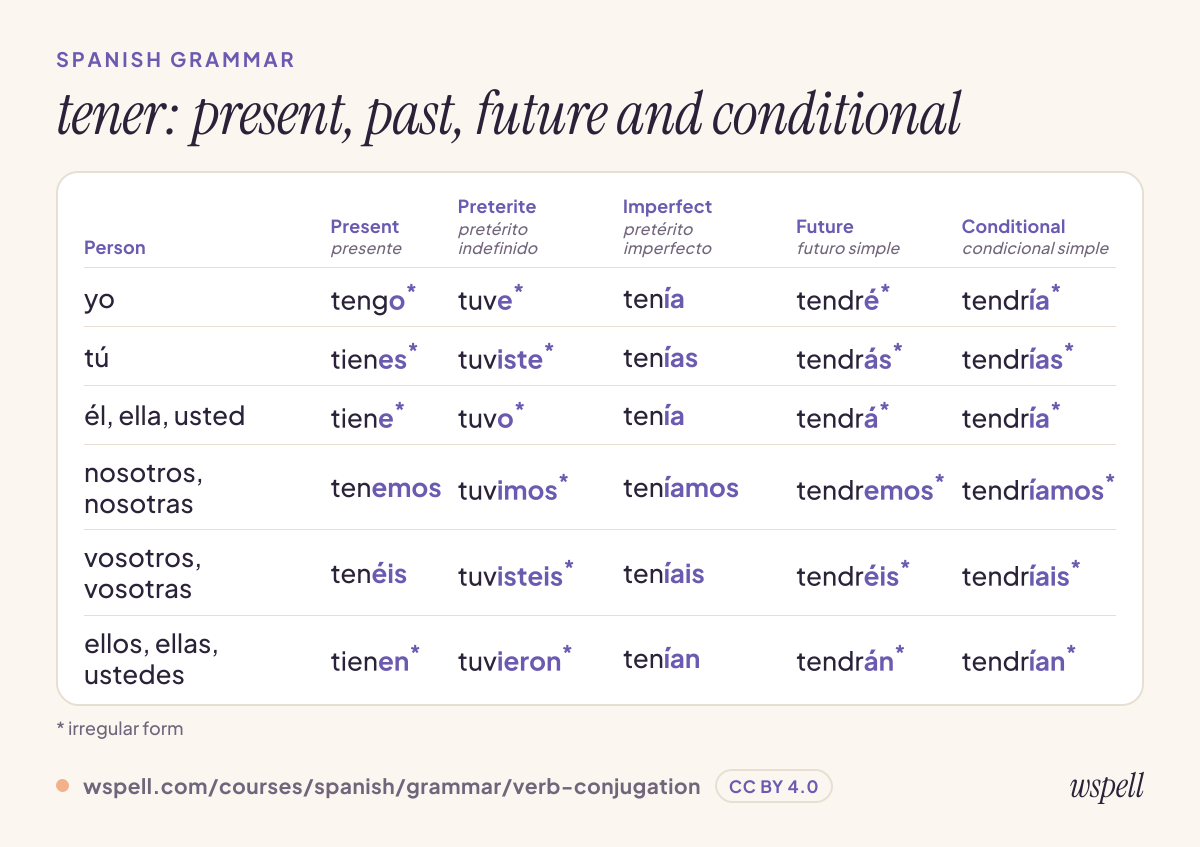
tener (to have)
| Person | Present presente | Preterite pretérito indefinido | Imperfect pretérito imperfecto | Future futuro simple | Conditional condicional simple |
|---|---|---|---|---|---|
| yo | tengo* | tuve* | tenía | tendré* | tendría* |
| tú | tienes* | tuviste* | tenías | tendrás* | tendrías* |
| él, ella, usted | tiene* | tuvo* | tenía | tendrá* | tendría* |
| nosotros, nosotras | tenemos | tuvimos* | teníamos | tendremos* | tendríamos* |
| vosotros, vosotras | tenéis | tuvisteis* | teníais | tendréis* | tendríais* |
| ellos, ellas, ustedes | tienen* | tuvieron* | tenían | tendrán* | tendrían* |
* irregular form
| Person | Present subjunctive presente de subjuntivo | Affirmative imperativo afirmativo |
|---|---|---|
| yo | tenga* | — |
| tú | tengas* | ten |
| él, ella, usted | tenga* | tenga usted |
| nosotros, nosotras | tengamos* | tengamos |
| vosotros, vosotras | tengáis* | tened |
| ellos, ellas, ustedes | tengan* | tengan ustedes |
* irregular form in the present subjunctive
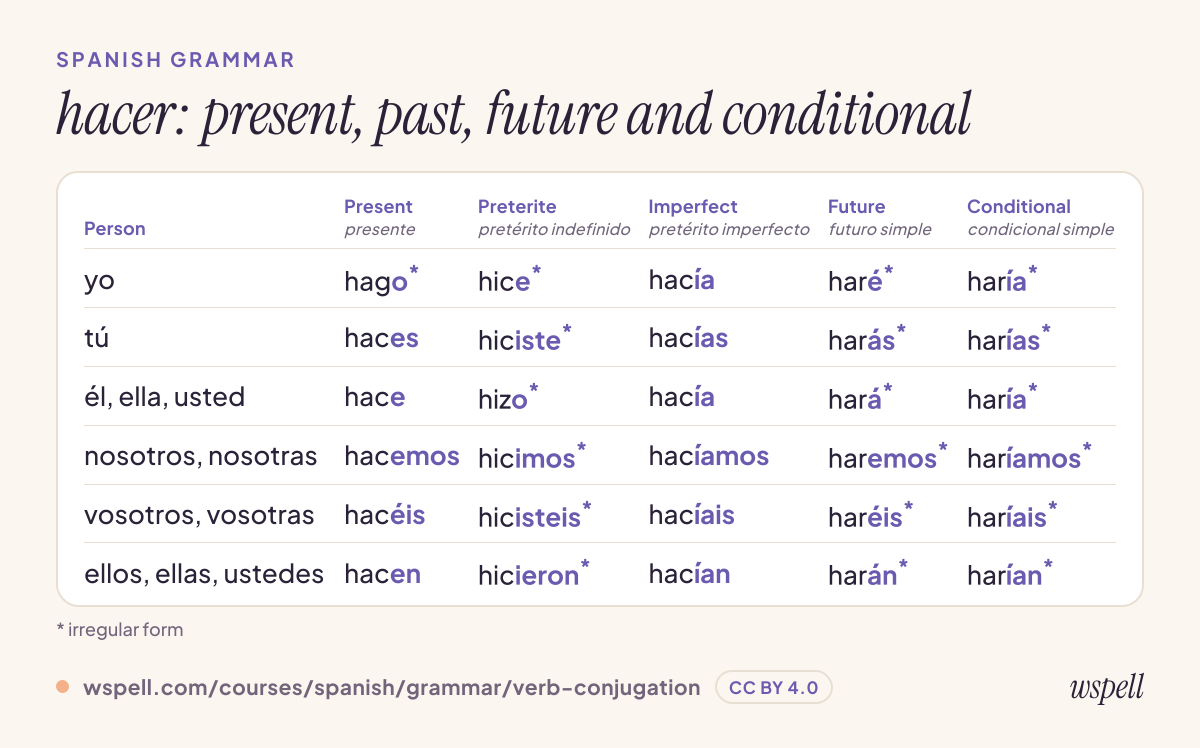
hacer (to do, to make)
| Person | Present presente | Preterite pretérito indefinido | Imperfect pretérito imperfecto | Future futuro simple | Conditional condicional simple |
|---|---|---|---|---|---|
| yo | hago* | hice* | hacía | haré* | haría* |
| tú | haces | hiciste* | hacías | harás* | harías* |
| él, ella, usted | hace | hizo* | hacía | hará* | haría* |
| nosotros, nosotras | hacemos | hicimos* | hacíamos | haremos* | haríamos* |
| vosotros, vosotras | hacéis | hicisteis* | hacíais | haréis* | haríais* |
| ellos, ellas, ustedes | hacen | hicieron* | hacían | harán* | harían* |
* irregular form
| Person | Present subjunctive presente de subjuntivo | Affirmative imperativo afirmativo |
|---|---|---|
| yo | haga* | — |
| tú | hagas* | haz |
| él, ella, usted | haga* | haga usted |
| nosotros, nosotras | hagamos* | hagamos |
| vosotros, vosotras | hagáis* | haced |
| ellos, ellas, ustedes | hagan* | hagan ustedes |
* irregular form in the present subjunctive
poder (can, to be able to)
Poder is rarely used in commands, so its table has no imperative.
| Person | Present presente | Preterite pretérito indefinido | Imperfect pretérito imperfecto | Future futuro simple | Conditional condicional simple | Present subjunctive presente de subjuntivo |
|---|---|---|---|---|---|---|
| yo | puedo* | pude* | podía | podré* | podría* | pueda* |
| tú | puedes* | pudiste* | podías | podrás* | podrías* | puedas* |
| él, ella, usted | puede* | pudo* | podía | podrá* | podría* | pueda* |
| nosotros, nosotras | podemos | pudimos* | podíamos | podremos* | podríamos* | podamos |
| vosotros, vosotras | podéis | pudisteis* | podíais | podréis* | podríais* | podáis |
| ellos, ellas, ustedes | pueden* | pudieron* | podían | podrán* | podrían* | puedan* |
* irregular form
Compound tenses: haber + participle
A compound tense is two words: a form of haber and the participle, which does not change. Here, the present perfect.
| Person | hablar | comer | vivir |
|---|---|---|---|
| yo | he hablado | he comido | he vivido |
| tú | has hablado | has comido | has vivido |
| él, ella, usted | ha hablado | ha comido | ha vivido |
| nosotros, nosotras | hemos hablado | hemos comido | hemos vivido |
| vosotros, vosotras | habéis hablado | habéis comido | habéis vivido |
| ellos, ellas, ustedes | han hablado | han comido | han vivido |
The present perfect: he hablado
haber (present: he, has, ha, hemos, habéis, han) + invariable past participle. Reports past actions in a time frame still open or relevant now; in much of Spain it also covers 'today/this week'. The auxiliary and participle are never split.
- Hoy he trabajado mucho. — Today I have worked a lot.
- ¿Alguna vez has estado en Perú? — Have you ever been to Peru?
learn it step by step
The DELE Spanish exam, A2 to B2: structure, scoring and practice
save or print this chart
Under the main tables on this page sits a picture of each — keep one on your phone, share it or print it.
Free to share and adapt under CC BY 4.0 — credit wspell and link to this page. the licence
credit line to copy: Spanish verb conjugation chart — wspell, CC BY 4.0, https://wspell.com/courses/spanish/grammar/verb-conjugation
questions
How many verb conjugations does Spanish have?
Three, named by the infinitive's ending: -ar (hablar), -er (comer) and -ir (vivir). In the present, -er and -ir verbs differ only in the nosotros and vosotros forms: comemos, coméis; vivimos, vivís.
Which Spanish verbs are irregular?
Many of the most frequent ones: ser, estar, ir, tener, hacer, poder and querer among them. Most change only some forms — the stem vowel (quiero, puedo), the yo form (tengo, hago) or the preterite, which takes a new stem and endings without a written accent (tuve, hice) — and conjugate regularly elsewhere.
How are the perfect tenses formed?
With a form of haber and the past participle: he hablado, he comido, he vivido. A regular participle ends in -ado (-ar verbs) or -ido (-er and -ir verbs); a few are irregular, such as hecho, dicho and visto. After haber the participle never changes.